[Third Office Information Session Report ②]
Lawyers at the firm discuss career choices and the support they receive from their clients.


Mimura Komatsu Law Office was established in 2019 by lawyers Ryoichi Mimura and Junya Komatsu. Initially, it started as a small firm with only a few lawyers, but it has expanded its business focusing on intellectual property, dispute resolution, and corporate law, and as of September 2026, it has grown to a team of 31 lawyers, including 9 former judges.
On September 15, 2026, Mimura Komatsu Law Office held its third firm information session, which was attended by approximately 50 lawyers, legal apprentices, and law school students, both in person and online. The program included an introduction to the firm's history and areas of practice, a panel discussion, a Q&A session, and a social gathering, fostering a lively exchange of opinions.
This article will share insights from a panel discussion featuring lawyers Junya Komatsu, Sho Kosasa, Naoki Kurokawa, and Sonoka Morikawa, including their career development strategies and how to cultivate areas of expertise.
Please see the article below for information on the firm's history, areas of practice, and characteristics.
Click here for a list of reports from the office information sessions.
Attorney Sho Kosasa – From criminal cases and defamation to corporate crisis management
Kosasa
My previous job was at a law firm renowned for its criminal cases. While the firm is strongly associated with criminal law, in reality, 80-90% of its cases were civil lawsuits, and it was primarily a firm that handled a large number of dispute resolution and litigation cases. In addition to criminal law, I also handled general civil lawsuits, as well as defamation cases, entertainment-related cases, and family law cases.
My reason for joining Mimura Komatsu Law Office was that I had originally been taught intellectual property by lawyer Ryoichi Mimura (co-managing partner) at university. I met lawyer Komatsu when I visited lawyer Mimura's office, and after that, we continued to face each other for many years as opposing counsel in corporate litigation. During that time, lawyer Komatsu told me, "I'm planning to start a new law firm with lawyer Mimura."
At the time, I was handling a major criminal case and couldn't move immediately, but since that case finished earlier than expected, I decided to transfer. One of the reasons for the transfer was that I wanted to work on intellectual property cases, but a major factor was that we shared the same belief that "litigation should be at the center of things."
Although our firm advertises itself as a "law firm strong in litigation," the actual number of lawsuits we handle is not particularly high.The key point is that "litigation is a possibility in every aspect of the work."I think so. Even in regular contract reviews, we consider the possibility of litigation. We also proceed with negotiations while considering the litigation risks. Our thinking was very much in line with each other, as litigation is the main focus. I've always been interested in intellectual property, so I'm grateful that they reached out to me.
Currently, in addition to patent and copyright litigation, civil litigation, and entertainment-related cases (including domestic disputes involving celebrities), I have recently been focusing primarily on crisis management and handling scandals. Having gained experience in corporate law through secondment to a business company, and serving on third-party committees for listed companies, my expertise has become concentrated in crisis management. Nevertheless, I still handle a wide range of cases, including patent litigation and other types of litigation.
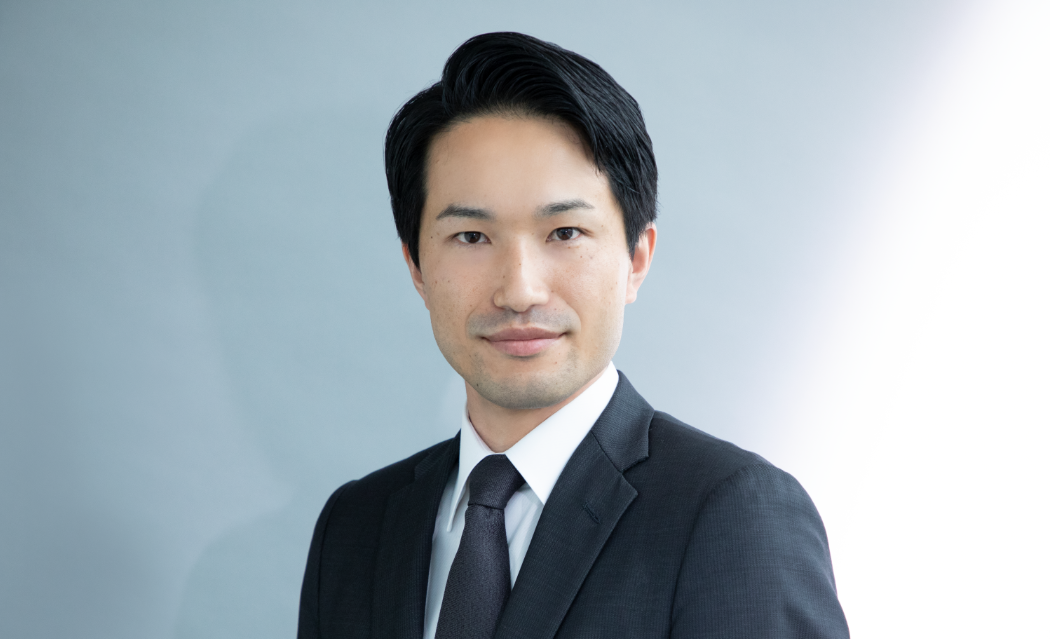
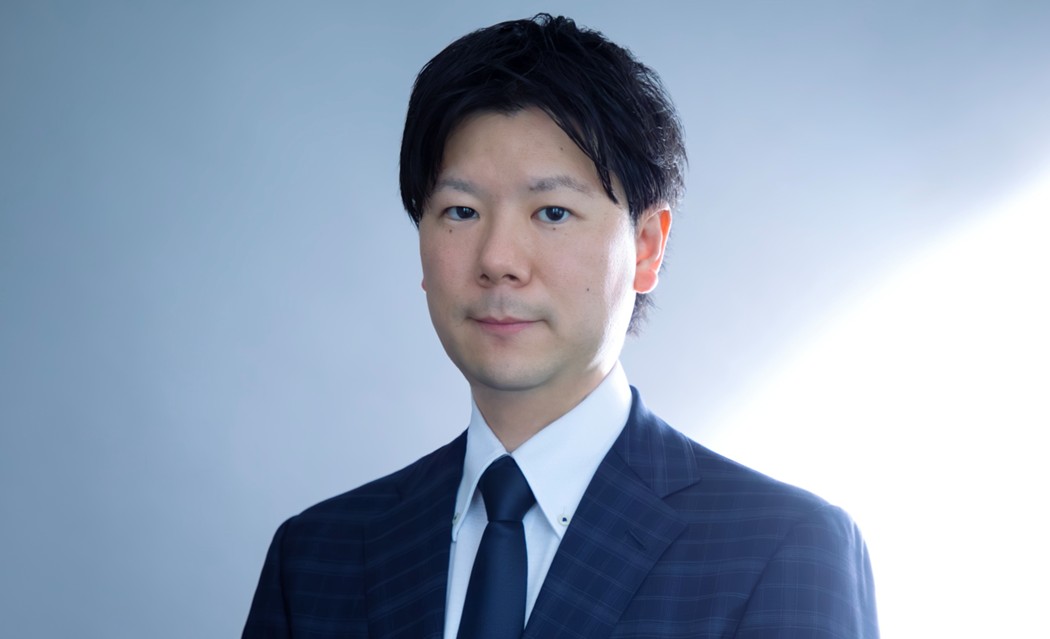
Attorney Naoki Kurokawa – After four years at the Ministry of Economy, Trade and Industry, he became a specialist in the Unfair Competition Prevention Act.
Kurokawa
This is my third law firm. My first was a firm specializing in franchise law, where I worked on franchise legal matters. My second firm, a general practice firm, mainly dealt with patent litigation. I think opportunities to experience patent litigation are rare unless you work at a so-called intellectual property boutique, that is, a firm specializing exclusively in intellectual property.
I've always had a strong desire to work in intellectual property since my undergraduate days, and I studied it under Professor Yoshiyuki Tamura at law school. It was during this time that I was approached by the Ministry of Economy, Trade and Industry with a request to help with the revision of the Unfair Competition Prevention Act. The Unfair Competition Prevention Act is a niche field that isn't often covered in classes. That's precisely why I thought I could become a leading expert in this field, and I decided to accept the assignment.
While typical secondments last two years, I was seconded for four years. During that time, I was in charge of the 2023 legal revisions and the revision of the trade secret management guidelines. Furthermore, regarding the "protection of voices," which has been a hot topic in recent years, I was involved in the establishment of a research group that examined the protection of publicity value in relation to the Unfair Competition Prevention Act.
The Unfair Competition Prevention Act is not a law that grants rights like patents, but rather a "law that regulates conduct." Therefore, I believe it is a law that is more relevant in practical applications, and I wanted to apply this knowledge to my work. In particular, trade secrets are contested in litigation starting from the very basic question of "what constitutes a trade secret?" This is where...Since this is a field that is not often discussed in academic circles, it is desirable to have a firm with former judges and experience handling a large number of intellectual property lawsuits.I thought.
I had known lawyer Komatsu for some time. When I consulted him about my desire to focus on unfair competition prevention laws and trade secret litigation, and to actively engage in writing and seminars, he encouraged me by saying, "If you want to do it, go ahead and do it."Not only can you utilize your past experiences, but you can also gain practical experience working with experienced judges.That's why I chose this firm.
Currently, I have many opportunities to give lectures on the Unfair Competition Prevention Act and trade secrets. I also receive consultations regarding trade secrets, and I am involved in patent and copyright litigation. Furthermore, as an investigator for the Civil Affairs Bureau of the Ministry of Justice, I am participating in the "Study Group on the Nature of Civil Liability for Unauthorized Use of Portraits, Voices, etc." When I consulted with Attorney Komatsu about taking on the job as an investigator for the Civil Affairs Bureau of the Ministry of Justice shortly after joining the firm, he encouraged me, saying, "Isn't that an honor?" I think this shows that our firm considers the careers of each and every lawyer.
Lawyer Sonoka Morikawa – From legal affairs at a music label to becoming a lawyer supporting the "generalist" of the industry.
Morikawa
I'm in my fourth year as a lawyer, and if I had to summarize my career in one sentence, it would be "a back-and-forth between legal work at a law firm and legal work at a music label." I initially worked at a law firm specializing in supporting startups, then moved to the contracts department at Sony Music Entertainment, and through a fortunate connection, I transferred to this firm.
I've been doing street dance for a long time, and I also love music, so I wanted to work in the entertainment industry. If you join a general company without qualifications, even if it's an entertainment company, you might be assigned to a department that doesn't involve entertainment. But if you become a lawyer who supports the entertainment industry, you'll naturally have more opportunities to be involved in entertainment. That's why I decided to become a lawyer.
At Sony Music Entertainment, I chose the "Contracts Department" rather than the Legal Department. The Contracts Department acts as a bridge between the Legal Department and the music production department. I received many inquiries that were close to the production side, such as contracts with new artists, management outsourcing agreements, and creating rules for remix competitions using our own master recordings.
My work mainly involved music label operations, specifically "master recording rights." For example, I would get very detailed inquiries about things like, "Should we distribute 19% or 20% of the master recording royalties to this artist?" It was very enjoyable, but it was such a niche field that I started to wonder if I should continue as a lawyer.
Around that time, a dancer approached me for business advice. While Sony Music allowed employees to have side jobs, they couldn't do anything in the entertainment field because it would create a conflict of interest. Driven by my desire to stand by the dancers, who are the creators of the entertainment industry that I love the most, I decided to quit my job and return to a law firm.
However, shortly after joining Sony Music, I had the opportunity to speak with several corporate lawyers to discuss my future career path. During those conversations, I noticed that experience like master recording contracts is considered too niche and therefore not easily counted as a typical "lawyer's career." As a result, I was wondering if there were any law firms where I could specifically utilize my experience at Sony Music.
ButAttorney Komatsu was exactly the kind of lawyer I was looking for, specializing in entertainment, especially music. He valued my "sense of market rates for master recording royalties" and "insights within the industry." I wanted someone who understood that kind of thing.After hearing about it, I felt it was a good agency and decided to join.
Currently, in addition to the music field, we handle corporate legal affairs for almost the entire entertainment industry, including performing arts, film, and dance. Rather than being bound by legal frameworks such as copyright and master recording rights, we aim to support the general corporate aspects of the entertainment industry, handling a wide range of consultations within the industry. It is possible to seek support on a daily basis from lawyers specializing in each field.
(I.e.
Attorney Morikawa's previous work experience was truly invaluable. Clients would ask him almost daily about negotiations regarding the distribution ratio of master recordings. However, there is no book or academic paper that provides such detailed information, so having someone who could advise on the market rate was absolutely perfect.
At our firm, many of our lawyers are seconded to other organizations or study abroad to enhance their expertise. Career options are diverse, including secondments to the intellectual property legal department of Nippon Steel, policy secretaries to ministers, studies at universities in the UK, secondments to the Cabinet Office's Intellectual Property Strategy Promotion Office, and research on entertainment intellectual property in London. We support our clients in pursuing their passions; this is a stance we value as a firm.
The true meaning of "strong in litigation"—more important than the number of cases: "the ability to anticipate litigation"
(I.e.
To be honest, I think the number of lawsuits is much smaller than you might imagine. Many intellectual property lawsuits are business conflicts, and we often can't take on cases due to relationship issues, so the number of cases is limited to begin with.
However, this does not mean that we are "weak in litigation." Quite the opposite, in fact. Normally, companies do not proactively initiate litigation unless they are consulted about being sued. This is because litigation is a heavy burden for both parties. However, our firm proceeds with negotiations based on the premise that "this is how things would unfold if litigation were to occur."
Even in cases where we're likely to lose, we can often foresee a point where we need to settle the matter to make the costs worthwhile. Because we can anticipate how the evidence will be evaluated, we can often resolve disputes before they go to court. As a result, we believe that this leads to solutions that are business-wise desirable for our clients, rather than dragging out litigation indefinitely.
Having several former judges on staff adds credibility to the prospects of the litigation.While typical law firms might say, "We don't know what the outcome will be, so let's just go ahead and file a lawsuit," our firm can clearly see the outcome, allowing clients to decide, "In that case, let's not do it."Whether that's good or bad is debatable, but it certainly provides clients with more information to make informed decisions. Many cases come to us through word-of-mouth referrals, with clients expressing gratitude for the advice they received before resorting to litigation.
Kosasa
Even among law firms that employ former judges, the types of lawyers on staff vary from firm to firm. Some lawyers may only write legal opinions as advisors, while others may have retired early in their tenure; the level of involvement differs from firm to firm.
What sets our firm apart is that our judges, who have "fulfilled their potential" as judges, handle cases in a normal, collaborative manner, often sitting side-by-side and engaging in conversations. We don't just handle opinion writing; we actually work on cases together. I think this kind of approach is quite rare.
Intellectual property matters, in particular, are handled by specialized departments, and there are certain tendencies depending on the presiding judge, which is important. Moreover, intellectual property litigation is limited to Tokyo and Osaka.Our firm's judges have experience working in intellectual property departments and, in some cases, have even served on a panel with the current presiding judge. Therefore, they can make assessments within a "well-known world," which, for better or worse, leads to highly accurate forecasts..
Kurokawa
Key points unique to intellectual property litigationThere are also things like this. For exampleNiche judgments such as "to what extent can we present evidence, and at what point does an attack or defense become belated" will be the deciding factor in the final battle.You may.
Even experienced judges familiar with general litigation may find it difficult to provide detailed advice on intellectual property litigation. Our firm has several experienced judges with expertise in intellectual property, allowing us to offer predictions and advice based on the combined experience of multiple judges. I believe this is a significant strength.
A workplace environment that prioritizes ease of consultation – a culture of discussion fostered by free-address seating.
Kurokawa
I often go to talk to professors, especially those with experience as judges. Since we have members who are passionate about intellectual property, including former judges, when I ask "What do you think about this?" the discussion gets lively and exciting. Sometimes the conversation goes in unexpected directions, which is also a learning experience. Because it's a free-address office, you can also see who seems busy. This has the advantage of making it easier to ask questions at the right time.
Kosasa
On the other hand, when a lawyer is busy, they may wear earphones, and this naturally conveys an atmosphere that suggests it's best not to approach them. While some lawyers work in the office and others work remotely, active communication is possible online, so it's not impossible to consult with a lawyer who isn't physically present.
Furthermore, our firm doesn't operate on a completely fixed team system; we work with various combinations depending on the case. That's why it's crucial for superiors and subordinates to communicate and share their approach to disputes as early as possible. Some senior colleagues prefer to work quietly remotely, while others are more inclined to engage in lively discussions on the spot, so you'll naturally find senior colleagues whose style suits you best. I think this is another characteristic of our firm.
Morikawa
One thing I want to tell young people is that in their first year, they often can't shake off the mindset of taking the bar exam, and they tend to think they have to submit a finished product to their superiors.Work and exams are different; it's overwhelmingly faster to get direction from your superiors even at intermediate stages.Hm.
Because we charge by the hour, it's best for both the client and the firm to rely on each other when necessary. Changing the plan at the final stage of the deliverable can actually delay delivery, so we value creating an environment where communication is easy.
A place where you can cultivate your passions—specialists and generalists alike are welcome.
Kosasa
From a career perspective, I have many colleagues who are more accomplished than me, so I don't intend to specialize in one area. However, I want to be able to handle initial consultations myself and refer clients to experts inside or outside the firm as needed. Within the firm, I aim to be a "hub" while also being able to handle urgent cases, such as criminal cases, myself rather than referring them elsewhere. People who are interested in intellectual property but are unsure if that's all they need might find my thinking relatable.
Kurokawa
I'm the complete opposite; I consider myself an "intellectual property enthusiast." I want to expand my learning further into related intellectual property fields such as patents, designs, copyrights, and trademarks, with trade secrets and the Unfair Competition Prevention Act as my core focus. The Unfair Competition Prevention Act is interconnected with patents (trade secrets), trademarks (acts that cause confusion with well-known indications), and designs (imitation of product forms). Therefore, focusing on these areas naturally leads to covering the entire field of intellectual property.
You can't expect to suddenly start selling and land intellectual property deals in your first year. However, if you gain experience in intellectual property litigation early on and build a track record of having "experienced intellectual property litigation at Mimura Komatsu," I believe that will be valuable for your future sales efforts.
Morikawa
My focus isn't on "which field" but rather on "what kind of clients I want to meet." I want to work with people in the music industry, musicians, and dance-related fields. To that end, I make an effort to frequent places I enjoy, such as music bars, dance recitals, and battles, to meet potential clients. For example, if a dancer asks me for advice about starting a new business, I'll relearn corporate law. In this way, I broaden the scope of my services to match the people I want to meet.
(I.e.
Our firm strongly supports our lawyers in developing their areas of expertise and client base. We encourage participation in seminars, lectures, external communication, and government-related work, and in some cases, the firm covers the costs.The reason behind adopting a commission-based system is the belief that "each lawyer should be able to earn a good income in the future."Hm.
In the legal profession, there's a deeply ingrained culture of older generations "hoarding" cases and clients, and because there's no retirement age, it's not uncommon for them to continue handling cases into their 70s and 80s. Our firm wants to actively pass the baton to our peers and younger generations. I even want to pass on the fields of fashion and art that I pioneered to the next generation.Although the firm is named "Mimura Komatsu," we want it to be a platform where individual lawyers can develop what they want to do., I think.
In our next report, we will address the questions raised by participants at this office information session.
Mimura Komatsu Law Office is looking for new team members.
Mimura and Komatsu Law Office's philosophy is to "provide solutions that go one step beyond what our clients are looking for," and our team of lawyers with experience as judges and lawyers who are well versed in industry practices and global knowledge aims to provide practical services quickly.
We are seeking motivated lawyers, both new graduates and experienced professionals, who share our firm's philosophy and goals, possess a constant spirit of challenge, and wish to utilize their interest in various industries and fields, as well as their past experience.
For details and application requirements, please see below.CLICK HERE
Profiles of the Participating Lawyers
KOMATSU Junya(Komatsu Junya)
Co-Managing Partner of Mimura Komatsu Law Offices. After handling numerous large-scale disputes and global cases in the litigation team at Nagashima Ohno & Tsunematsu Law Offices, he co-founded this firm with lawyer Ryoichi Mimura in 2019. He studied fashion law, art law, and entertainment law through his studies at a US law school. He provides specialized legal services in Japan for various industrial sectors. While focusing on intellectual property, he also handles a wide range of fields including copyright, art, entertainment, and architecture. His philosophy is to "propose solutions that go one step beyond what clients are looking for."
KOSASA Sho(Kosasa Sho)
After working at Hironaka Law Office, he joined Mimura Komatsu Law Office. In his previous position, he handled large-scale international criminal cases, as well as civil litigation, which constituted the majority of cases, dealing with a wide range of issues from defamation and entertainment to family law. He also gained practical experience in corporate law through secondment to a business company. In recent years, he has focused on crisis management and misconduct response, serving as a member of third-party committees for listed companies. While he has a strong track record in responding to emergencies that occur within companies, he also continues to work on diverse cases, including patent litigation involving intellectual property.
Naoki Kurokawa(Naoki Kurokawa)
He is well-versed in the Unfair Competition Prevention Act and the practical aspects of trade secrets. After working at a firm primarily focused on franchises and a general firm handling patent litigation, he was seconded to the Intellectual Property Policy Office of the Ministry of Economy, Trade and Industry for four years. During his secondment, he was involved in the 2023 amendment to the Unfair Competition Prevention Act, and was not only involved in the revision of the trade secret management guidelines and the establishment of a research group on "protection of voice," but also gave lectures at overseas symposiums and universities. Currently, he also serves as an investigator for the Civil Affairs Bureau of the Ministry of Justice and is also focusing on various seminars. While handling consultations on trade secrets and litigation involving trade secrets, unfair competition laws, patents, and copyrights, he is expanding his expertise to the entire field of intellectual property.
Morikawa Sonoka(Morikawa Sonoka)
A lawyer with extensive practical experience in the entertainment industry, particularly in the music sector. After working at a law firm specializing in startup support, he joined the contracts department of Sony Music Entertainment. There, he handled numerous legal matters close to the production process, including contracts with new artists, master recording rights, and distribution of master recording royalties. Currently, in addition to music, he handles corporate legal affairs for the entire entertainment industry, including performers, film, and dance. His work extends beyond the legal framework of copyright and master recording rights, encompassing general corporate law for the entertainment industry, taking into account industry-specific business practices and market trends.
*The report content and lawyer profile information are current as of the time of writing this article.
【2026.10.5】
Click here for legal advice and media appearances
ContactMiKoTama email magazine
Distributing various legal information topics via email newsletter
Related article
-
[Trade Secrets / Seminar Report - Part 2]
Leaking it is a disaster. Even letting it get in is a disaster. ~The reality and practical aspects of trade secret risk~MIKOTAMA Seminar #09, hosted by Mimura Komatsu Law Office, was held on September 29, 2026...
-
[Trade Secrets / Seminar Report - Part 2]
Leaking it is a disaster. Even letting it get in is a disaster. ~The reality and practical aspects of trade secret risk~MIKOTAMA Seminar #09, hosted by Mimura Komatsu Law Office, was held on September 29, 2026...
-
[Trade Secrets / Seminar Report Part 1]
Leaking it is a disaster. Even letting it get in is a disaster. ~The reality and practical aspects of trade secret risk~MIKOTAMA Seminar #09, hosted by Mimura Komatsu Law Office, was held on September 29, 2026...