[Series: An Introduction to Trade Secrets for Practitioners] Part 4 (Final)
What happens if you infringe on trade secrets?
- Criminal penalties, civil liability, and disciplinary action
A trade secret, under the Unfair Competition Prevention Act, refers to information that meets the three requirements of confidentiality, usefulness, and non-publicity.
In recent years, data breaches have increased in both criminal and civil cases, with the number of arrests by the police increasing approximately eightfold and the number of consultations received increasing approximately sixfold. More than 80% of the leaks occur internally, such as through employees or former employees, and in some cases, not only the person who took the information but also the company that hired the new employee and the employees themselves have been punished.
This series, "An Introduction to Trade Secrets for Practitioners," is the introductory part (4 parts in total) of a series in which lawyer Naoki Kurokawa, who was in charge of the Ministry of Economy, Trade and Industry's "Guidelines for Trade Secret Management" revised in March 2025 and amended in 2023, explains the basics in an easy-to-understand manner.
In the fourth installment, we will examine the three risks involved if you take (or bring in) trade secrets: criminal penalties, civil liability, and disciplinary action.
XNUMXst:Leaking them is a crime, and receiving them is also a crime – the risk of "trade secrets" leaking is now a reality.
The second:What exactly is a "trade secret"? – Three conditions and other ways to protect them
The third:The biggest point of contention: "Secrecy management"—what's needed is not "impenetrable security" but "recognizability."
In serious cases, "criminal penalties" may be imposed.
In cases of serious infringement of trade secrets, criminal penalties may be imposed.
Individuals may face imprisonment of up to 10 years or a fine of up to 2,000 million yen (Article 21, Paragraphs 1 and 2 of the Unfair Competition Prevention Act). Both imprisonment and a fine may be imposed. If the purpose is to use the trade secret outside of Japan, the maximum fine is increased to 3,000 million yen (Article 21, Paragraphs 4 and 5 of the Unfair Competition Prevention Act).
One actual court case involved a sentence of 5 years imprisonment and a fine of 300 million yen (2015, Tokyo District Court; at the time, it was "imprisonment" rather than "detention").
The penalties are not limited to the individual perpetrator; the corporation to which that person belongs can also be punished (corporate liability provision (Article 22, Paragraph 1 of the Unfair Competition Prevention Act)). However, the company whose trade secrets were taken is not subject to punishment.
Part1In the case involving the conveyor belt sushi chain mentioned earlier, the company that the employee was transferred to was fined 3,000 million yen.
"Civil liability" applies to actual losses incurred by companies.
Companies whose trade secrets have been infringed can file civil lawsuits for damages. There are court cases that have ordered an individual employee to pay approximately 10 billion yen in damages (Tokyo District Court, 2019) and another that ordered approximately 4 million yen in damages (Fukuoka District Court, 2002).
In addition, "disciplinary action"
In addition to criminal and civil penalties, internal company disciplinary action cannot be overlooked. An employee who takes trade secrets (or brings them from a previous job) may face disciplinary action based on the company's employment regulations. If this leads to dismissal, the employee will not only lose their job but may also face difficulties in finding new employment in the future.
| Classification | Main contents | Examples of actual court cases |
|---|---|---|
| Criminal penalty (individual) | Imprisonment for up to 10 years / Fine of up to 2,000 million yen (up to 3,000 million yen for use overseas, etc.) |
Five years imprisonment and a 3 million yen fine (2015, Tokyo District Court) |
| civil liability | Compensation for damages, etc. | Approximately 10 billion yen (2019, Tokyo District Court) / Approximately 4 million yen (Fukuoka District Court, 2002) |
| Internal disciplinary action | Disciplinary action based on employment regulations (such as dismissal) | - |
The party that receives the item also faces risks such as criminal penalties.
Here is the first"Leaking it is a crime, receiving it is also a crime—the risk of 'trade secrets' leaking is now a reality."Please remember this.
These risks are not limited to the person who took the information. Companies and their employees who receive trade secrets from a new employee and use or disclose them can also be subject to criminal penalties and civil liability. It is dangerous to assume that a corporation will not be prosecuted. As mentioned in the first installment, Kappa Sushi, which had its trade secrets taken and used, was fined 30 million yen as a criminal offense.
Furthermore, even if a corporation ultimately avoids prosecution, the possibility of it being searched by law enforcement cannot be ruled out. In fact, in a case where a SoftBank employee who had been offered a job at Rakuten Mobile took SoftBank's trade secrets, reports indicate that Rakuten Mobile, the company the employee was going to work for, was searched. Similarly, in a case where a Kanematsu employee who had been offered a job at Sojitz took Kanematsu's trade secrets, reports indicate that Sojitz, the company the employee was going to work for, was searched.
Now that mid-career hiring has become commonplace, employers need to create systems that prevent candidates from bringing in information about their previous work experience.
That concludes the basics of trade secrets.Why is it important? (Part 1),What constitutes a trade secret? (Part 2),How to manage it (Part 3)We have covered the consequences of infringement (Part 4).
First, take this opportunity to check whether your company's information can be protected as trade secrets.
Profile
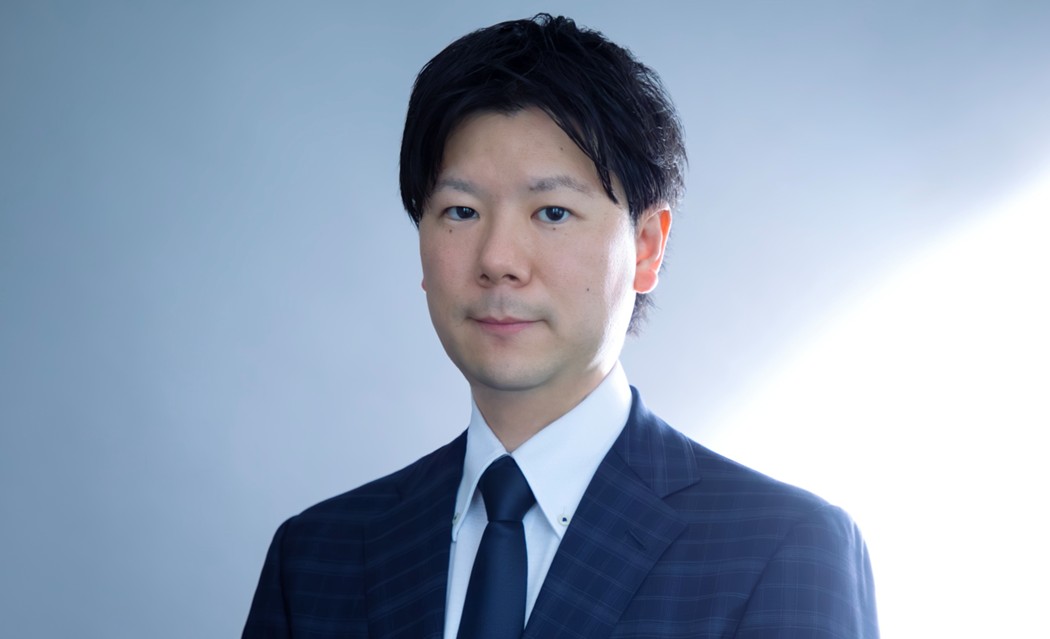
Naoki Kurokawa(Attorney and Patent Attorney, Mimura Komatsu Law Office)
He handles a wide range of corporate legal matters, primarily focusing on intellectual property, trade secret protection, unfair competition prevention law, and economic security. He spent four years as Assistant Director of the Intellectual Property Policy Office at the Ministry of Economy, Trade and Industry, where he gained frontline experience in legislative practice, including involvement in the revision of the Unfair Competition Prevention Law and the revision of the Trade Secret Management Guidelines. His strength lies in providing sophisticated legal advice that delves into the background of legal systems and policy objectives. He is an expert who supports the protection of corporate competitiveness and business value, including intellectual property litigation, countermeasures against counterfeit products, and information leakage response.
Our firm assists companies in ensuring their information is managed in a way that meets confidentiality standards—including reviewing the consistency of regulations, labeling, access restrictions, and confidentiality agreements.
Click here for information on one-time consultations and retainer agreements.
【2026.9.11】
Click here for legal advice and media appearances
ContactMiKoTama email magazine
Distributing various legal information topics via email newsletter
Other articles by Naoki Kurokawa
-
[Series: An Introduction to Trade Secrets for Business Professionals] Part 3
The biggest point of contention: "Secrecy management"
What's needed isn't "impenetrable defense," but "recognizability."Why is "confidentiality management" a point of contention? Trade secrets are intangible "information." In the case of patents, ...
-
[Series: An Introduction to Trade Secrets for Business Professionals] Part 2
What exactly are "trade secrets"?
- Three conditions and other ways to protect yourselfWhat constitutes a "trade secret"? Trade secrets can be broadly divided into sales information and technical information. Sales...
-
[Series: An Introduction to Trade Secrets for Business Professionals] Part 1
Leaking it is a no-no, and receiving it is also a no-no.
—The risk of "trade secrets" being leaked is now a reality.A series of trade secret leaks: In recent years, there has been a noticeable increase in reports of trade secret leaks being treated as criminal cases...
Related article
-
[Trade Secrets / Seminar Report - Part 2]
Leaking it is a disaster. Even letting it get in is a disaster. ~The reality and practical aspects of trade secret risk~MIKOTAMA Seminar #09, hosted by Mimura Komatsu Law Office, was held on September 29, 2026...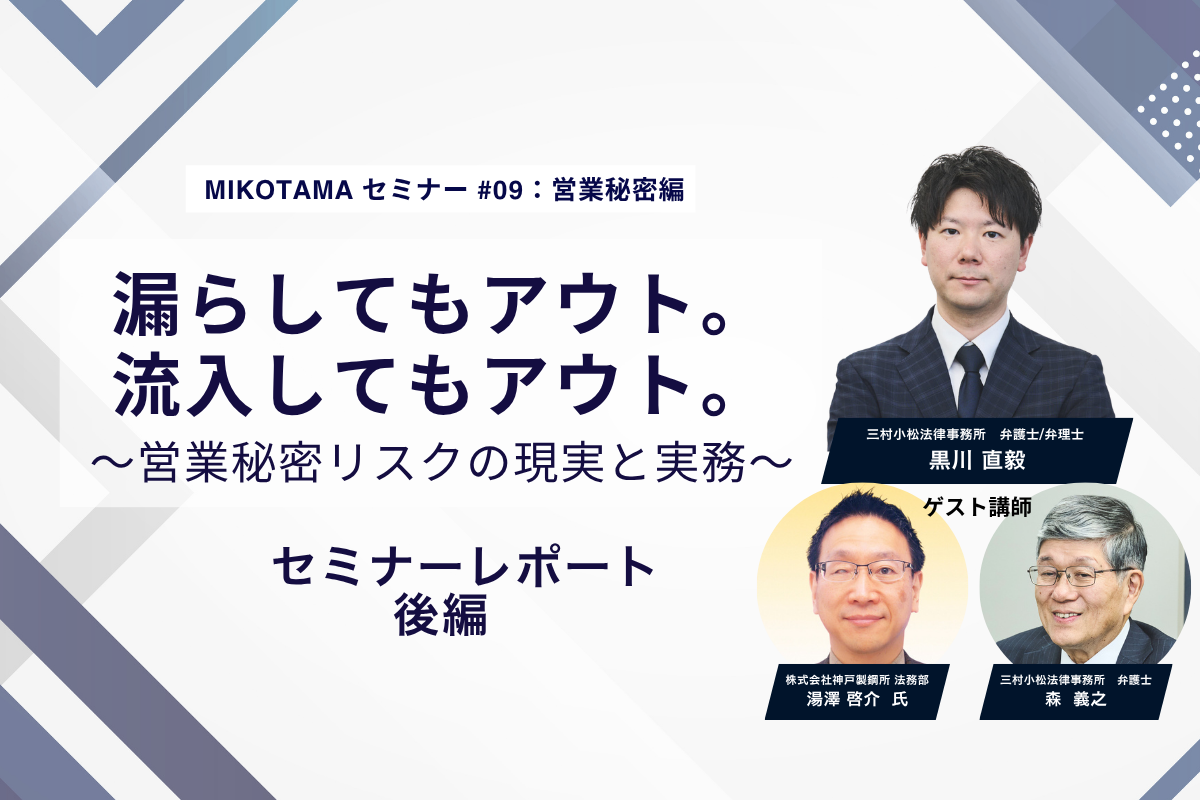
-
[Series: Generating AI and Voice Protection] Part 2
Tracking domestic and international developments chronologically – From private self-defense to rule-making"My favorite voice actor is singing a song they've never sung before." "In that person's voice, they're saying something they would never say themselves..."
-
[Trade Secrets / Seminar Report - Part 2]
Leaking it is a disaster. Even letting it get in is a disaster. ~The reality and practical aspects of trade secret risk~MIKOTAMA Seminar #09, hosted by Mimura Komatsu Law Office, was held on September 29, 2026...