Lawyers specializing in handling scandals: "Emergency physician type" lawyers
The Crossroads of Litigation, Criminal Cases, and Intellectual Property (Part 2)
-

- #Interview #intellectual property #lawyer #Litigation/Arbitration #Corporate legal affairs #Crisis management #criminal case
[Interview by lawyer Sho Kosasa]
"When a problem arises within our company, we don't know who to consult." We often hear this from company executives and legal personnel. Addressing scandals and misconduct requires not only responding after they occur, but also proactive prevention.
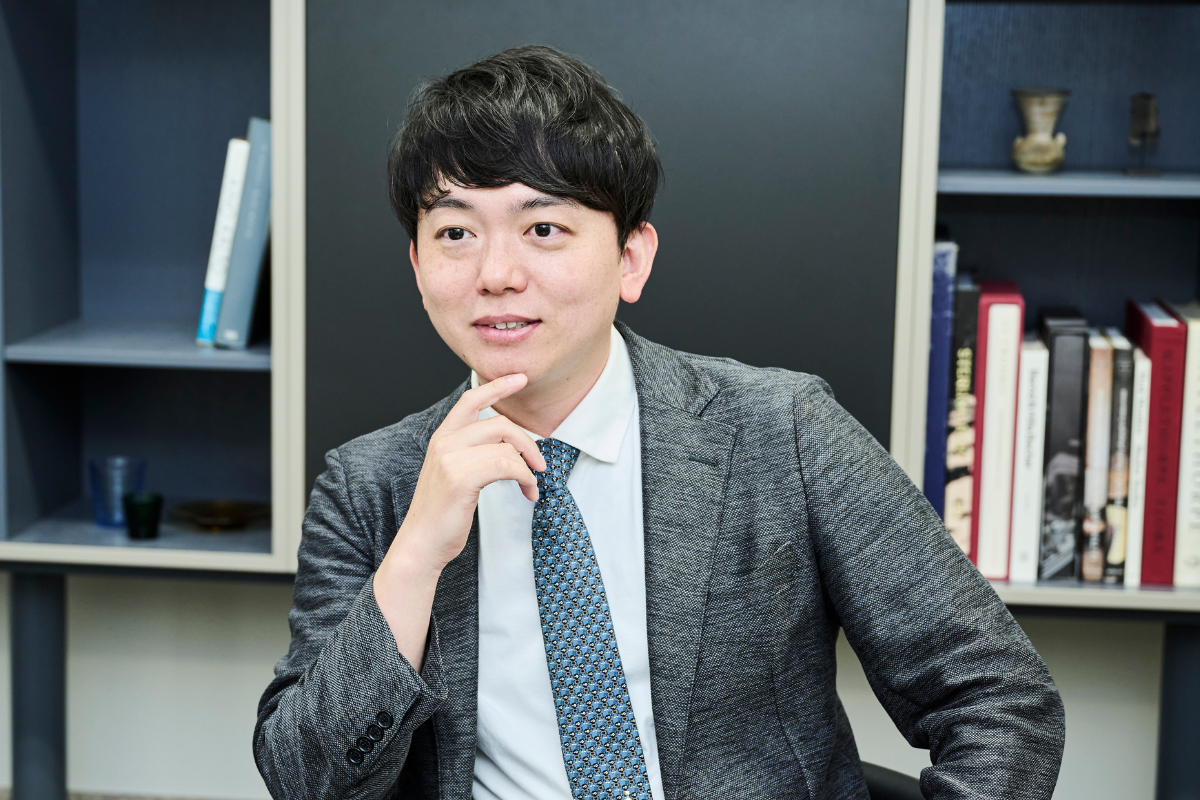
In this article, we interview lawyer Sho Kosasa, who has worked across multiple fields, primarily litigation, criminal law, and intellectual property, about his work at Mimura Komatsu Law Office, his handling of misconduct cases, and his vision for the role of lawyers in the age of AI.
The first part isCLICK HERE
Centered around litigation, our work spans multiple areas, including fraud investigations, third-party committees, intellectual property, and criminal cases.
—What kind of law firm is Mimura Komatsu Law Office?
Mimura Komatsu Law Office, despite its relatively small size, possesses a strong sense of craftsmanship and a unique approach that only Mimura Komatsu can offer. While maintaining individual strengths, the firm operates with a strong sense of organic unity. They have a particularly impressive team of specialists in the entertainment field.
We are currently a firm with around 30 people, but we want to continue to be a firm where each practitioner retains their unique individuality.
then,One of the strengths of Mimura Komatsu Law Office is that many of its lawyers are former judges.And these aren't people who served as judges for just a few years and then retired; they are individuals who have gained extensive experience in judicial practice on the front lines over many years.
These are people who have long been responsible for the work of determining the facts and applying the law,It's incredibly reliable in situations like investigative cases where the question is "what facts should be used to make a judgment?"
I personally make an effort to actively seek out opinions. I believe that being able to work on cases as a team, utilizing the knowledge of these experienced professionals, is something unique to this firm.
—Could you tell us about your main current work at Mimura Komatsu Law Office?
Our main focus is, of course, litigation, but that's not all. Broadly speaking, we handle the following types of work:
- General civil and domestic cases, including consultations, mediation, and litigation cases.
- Intellectual property consultation and litigation cases; internal investigations into harassment and misconduct (support for both the investigating and investigated parties).
- External investigation as a member of a third-party committee/special investigation committee
- Handling general criminal cases and corporate criminal cases
- Leveraging my experience working abroad to support companies' internal operations.
Until now, whenever a case requiring criminal investigation arose within the firm, I handled almost all of them myself. However, with the expansion of our team, I believe we can now handle cases more effectively as a team.
My experience with criminal cases is something I gained at Hironaka Law Firm, and I intend to continue cherishing that experience.
Other,Recently, we have also been focusing on investigating corporate misconduct and scandals.I am currently serving as a member of a special investigative committee for a listed company.
like thisThe investigation involves examining where evidence lies, conducting interviews with relevant parties, organizing the obtained evidence, and applying and evaluating it legally—all of which allows me to utilize the knowledge I've cultivated through my previous focus on litigation.That's what I think. These kinds of investigation-related tasks range from internal ones like harassment investigations to external roles such as acting as a third-party committee member.
What makes a lawyer strong in handling scandals? – The "emergency physician" approach.
—Considering your current work, what do you consider to be your strengths?
To be honest, I don't think there's anything I can say I'm exceptionally good at. I know many people who excel in a particular field, such as my peers who specialize in criminal cases and have secured numerous acquittals, or professors who have handled dozens of patent lawsuits.
However, I think that when you stand at a point where many things intersect, a certain degree of individuality inevitably emerges. I've always wanted to be a generalist who can observe a wide range of situations and act accordingly, rather than a specialist who deeply pursues one field. Think of me as an emergency physician in the medical field.
When faced with a difficult situation, the first priority is to take initial action to prevent serious injury. This involves identifying the cause, determining the appropriate course of action, taking necessary measures, and then, if more specialized treatment is required, working in conjunction with a trusted specialist—that is, a specialist in the relevant field.I want to be a lawyer who can fulfill that kind of role.
—In what situations is a "remote-physician-type" lawyer particularly useful?
The first thing that comes to mind is "handling scandals."
Responding to misconduct involves a wide variety of actions, from investigating harassment and wrongdoing, to involvement with third-party committees and special investigative committees, to handling criminal cases, and even preventative crisis management such as risk checks before making any public statements. The required response differs depending on the case. There is also no single correct way to conclude such a matter.
That's why it's necessary to consider multiple factors and make decisions with a broad perspective from the initial stages, and I think this is well-suited to the "emergency physician" approach, which allows you to see things from multiple angles.
-What other strengths do you have in corporate legal affairs??
Having gained experience working within a company through a secondment program significantly improved my understanding of the requests companies make and the responses they expect from lawyers.
Of course, Nippon Steel, where I was seconded, is one of Japan's largest global companies, and I don't necessarily think that other companies are the same. However, having established a standard and framework for understanding companies has allowed me to be more aware of various aspects of a company when interacting with people from different companies.
Furthermore, there are not many lawyers in the corporate legal field who handle criminal cases themselves.Many corporate lawyers tend to refer criminal cases to other lawyers, either within or outside their firm. However, I take on these cases myself. If it becomes difficult for our firm to handle the case alone due to conflicts of interest or other reasons, we can also cooperate with other firms, including Hironaka.It is not uncommon for company representatives or employees to become unexpectedly involved in criminal cases.
In that sense, my current position is precisely that of an "emergency physician" type of comprehensive responder, where I can work across criminal, intellectual property, and investigative fields, with litigation as my central focus.
Areas where I would like to further develop my expertise in the future
—Are there any areas you would like to focus on in particular going forward?
I definitely want to focus on handling scandals and crisis management. I feel that this is the area where the experience I've accumulated in various fields overlaps the most.
When we talk about dealing with scandals, you might imagine responding after something has happened. Of course, that's important, but I want to include prevention beforehand, that is, crisis management in a broad sense.
—What specific preventative measures can be taken to address misconduct?
For example, when a publisher is considering publishing an article that could potentially defame someone, a lawyer may rigorously check the content beforehand. The perspective is, "Would we win if we were sued?" This is a typical example of preventative action.
If corporate PR representatives and influencers consult with us at the pre-event stage, when they're thinking about posting something, rather than after a controversy erupts, we can inform them of the risks beforehand. Even if a controversy does occur, they can respond calmly.
For companies, having a system in place beforehand that allows employees to report problems early on, such as an internal whistleblowing system, can also be a preventative measure. The goal is to create a system that makes it easier to detect problems before they escalate.
The approach to prevention varies depending on whether the target is a company or an individual such as a celebrity or politician. If it's a company, it will be held accountable to stakeholders such as shareholders and creditors. On the other hand, for people like celebrities and politicians whose work depends on their public image and reputation, that reputation directly impacts their credibility and work.
Although the target may differ, they share the common goal of protecting external credibility. That's why I believe it's important to build relationships where you can casually consult with someone beforehand.
—Besides dealing with scandals, are there any other areas you are currently interested in?
One area that we cannot avoid going forward is legal matters related to AI. In fact, many companies and individuals have already adopted AI, and I believe it will become an increasingly important field. As AI technology itself is an area of interest to me, I would like to be actively involved in it.
However, in my case, rather than being in the field of solving problems with AI,I am interested in areas such as "the use of AI by lawyers" and "what role lawyers should play in a society where AI is widespread.".
—How do you think the work of lawyers will change with the spread of AI?
I believe that in the future, AI will handle a variety of tasks, even in the legal field. Once the sources are narrowed down to a certain extent, AI is already being incorporated into business processes to neatly summarize information. It is said that AI excels at tasks such as comprehensively and thoroughly gathering evidence in litigation and evidence detected through digital forensics in investigations.
However, in some legal fields, there is no single "correct answer." This is especially true in areas like intellectual property, where even academics have differing opinions.Ultimately, an opinion or argument is needed that states, "This is what this lawyer believes should be decided." This involves an element of authority, for better or for worse, so even if AI can produce similar logic, the unique role of a lawyer will remain.I think.
From my perspective, ultimately, I believe it's crucial for lawyers to carefully review and make their own judgments. Rather than rejecting AI outright, saying "AI is wrong," I think the correct approach is to use it wisely. If it can reduce errors and save many lives with less effort, then I believe it's something to be welcomed by lawyers who take an "emergency physician" approach.
—As AI takes over more jobs, what skills do you think will be required of people who become lawyers in the future?
I always tell my students, "I want you to have all sorts of experiences." And I mean real-world experiences that you've personally experienced. Whether it's socializing, part-time jobs, traveling, or anything else.
Humans can behave unexpectedly, but there are also aspects that are simply "that's just how people are." I believe that these obvious things are very important for legal professionals who deal with legal issues that arise in people's activities. If you only focus on legal knowledge or AI, you won't be able to understand the actions of people who are actually acting. For example, email as evidence isn't something that is left because someone thinks, "I want to leave an email," but rather it remains as a result of human activity, such as "these two people want to communicate with each other."
No matter how advanced the techniques for finding evidence become, if you can't imagine what the person is doing, you can't fully utilize those techniques. That's why I believe that people who have cultivated their imagination through various experiences are the ones who ultimately become excellent lawyers in any field.
For consultations regarding handling scandals and crisis management, please contact Mimura Komatsu Law Office.
Mimura Komatsu Law Office offers consultations regarding corporate misconduct, fraud investigations, and crisis management. Even if you're unsure whether you should seek advice, consulting early can broaden your options. Since specific response strategies vary depending on the individual situation, we recommend consulting with a specialist. Please feel free to contact us to schedule a free consultation.
For requests and inquiries, please contact us.CLICK HERE
Profile
Sho Kosasa
He handles criminal cases, intellectual property cases, and corporate litigation across disciplines. After joining Hironaka Law Office, he was involved in criminal defense in high-profile cases that attracted significant social attention, as well as large-scale defense team cases. He later moved to Mimura Komatsu Law Office. After being seconded to Nippon Steel Corporation, he also gained practical experience in in-house corporate legal affairs. Currently, he focuses on various litigation cases, including general civil and family law cases, as well as internal investigations into harassment and misconduct, serving on third-party committees and special investigation committees, and providing consultation and litigation related to intellectual property.
【2026.8.31】
Click here for legal advice and media appearances
ContactMiKoTama email magazine
Distributing various legal information topics via email newsletter
Other articles by Sho Kosasa
-
Lawyers specializing in handling scandals: "Emergency physician type" lawyers
The Crossroads of Litigation, Criminal Cases, and Intellectual Property (Part 1)[Interview with lawyer Sho Kosasa] "When a problem arises within our company, we don't know who to consult..."
-
Looking back at the defamation case involving Yusuke Yamamoto,
Yahoo! News distribution responsibilityOn December 2024, 12, the Supreme Court ruled that actor Yusuke Yamamoto was a LINE Yahoo!
Related article
-
The interpersonal skills cultivated in sports clubs earn the trust of clients.
Aiming to become a fashion-oriented "local dialect"[Interview / Lawyer Mirinji] After dedicating himself to archery throughout middle school, high school, and university, he chose the path of becoming a lawyer...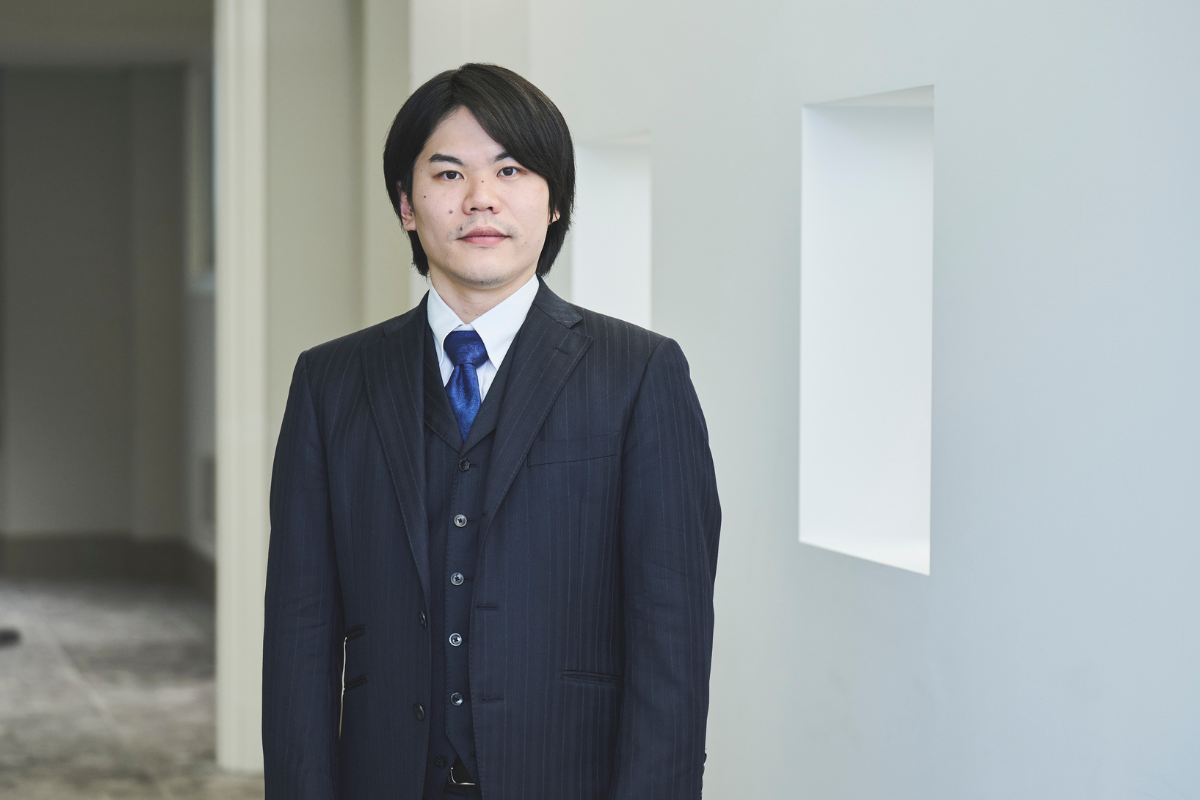
-
[Special Roundtable Discussion with Former Judges and Lawyers ②]
The significance of having lawyers with a background as judges at a law firm.
—Situations where experience in litigation, intellectual property, inheritance, and notary public work comes into play.Mimura Komatsu Law Office specializes in litigation and intellectual property, and handles a wide range of legal matters, including general corporate law...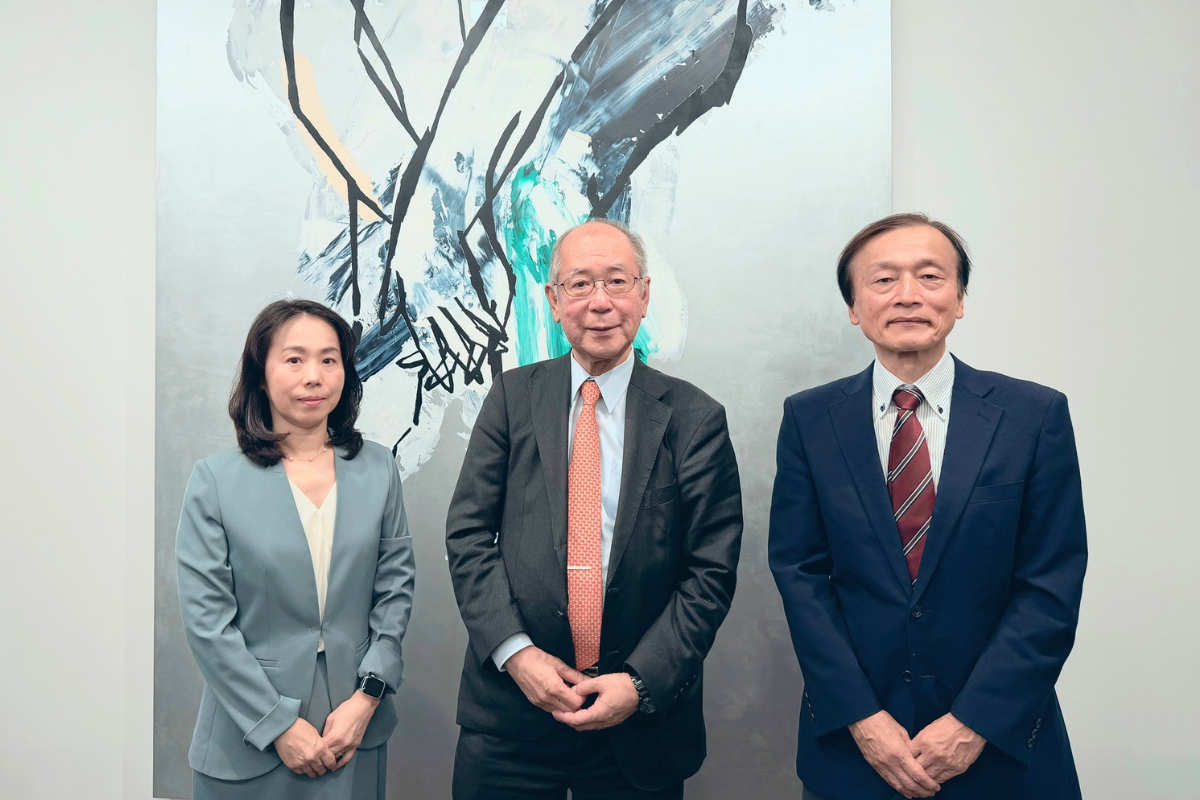
-
[Interview with the Managing Partner of Mimura Komatsu Law Office - Part 2]
Aiming to become a law firm strong in litigation.
—Our journey so far[Interview / Attorney Ryoichi Mimura & Attorney Junya Komatsu] Part 1 here Part 2 here Assuming...