



Interpreting international news through the lens of international humanitarian law
Factional structures in the international law community as seen in the UK
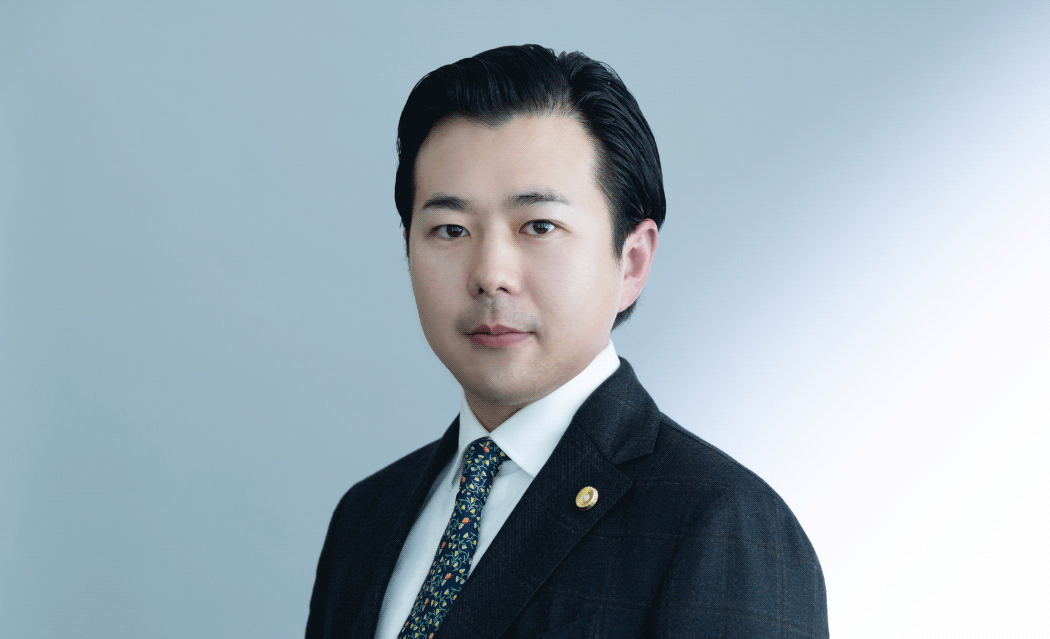
I am currently studying for an LLM in International Humanitarian Law at the University of Essex Law School in the UK.
Although I received a recommendation for studying abroad through the Japan Federation of Bar Associations' Overseas Law School Recommendation Program, while many of my predecessors at Essex Law School have specialized in the "mainstream" field of international human rights law, international "humanitarian" law has long remained a relatively unfamiliar legal field in Japan.
However, the phrase "suspected violation of international law," which is often seen in news reports about recent conflicts such as the Russia-Ukraine War and the war between Iran and the United States/Israel, is actually closely related to international humanitarian law and is a field of law that is quietly gaining attention.
Furthermore, at Essex Law School, where human rights and humanitarian researchers teach together, I learned not only humanitarian law but also international public law in general and human rights law, and I also gained insights into the differences in relationships and characteristics within the field of international law.
Therefore, this article will provide an overview of humanitarian law fields such as international humanitarian law, the law of the use of force, and international criminal law, which are useful for delving deeper into international news, as well as introducing the relationship between human rights and humanitarian researchers and practitioners, and the career of a military lawyer.
Understanding International Law in Times of Crisis — A Blueprint for the Rules of War
1. What is International Humanitarian Law?
International humanitarian law is easier to understand if you know its other name, Law of Armed Conflict. Humanitarian law applies different rules to situations of armed conflict, which are considered emergencies, and aims to make the battlefield as humane as possible.
For example, from the perspective of the Right to Life in human rights law, which guarantees freedom from harm to life and bodily harm, war, which inevitably results in casualties, should be absolutely prohibited. However, the fundamental principle of international law is the agreement of each country, and it has no binding force on countries that do not sign or ratify treaties. Even if there is a treaty that advocates the absolute prohibition of war, it is meaningless if the major countries do not sign it. In this situation, humanitarian law has sought to find common ground among countries, based on the premise that even if war occurs, it is necessary to prevent the creation of horrific battlefields that no one wants.
At the core of international humanitarian law are the four Geneva Conventions and their Additional Protocols, which stipulate, for example, the prohibition of attacks against wounded combatants and prisoners of war, the obligation to protect them, and the prohibition of intentional attacks against civilians and civilian facilities. Because the Geneva Conventions are based on the premise of preventing tragic wars, almost all countries are signatories, and they are strong treaties that impose national liability, including reparations, on those that violate them.
Based on similar reasoning, there are also treaties concerning methods of warfare that prohibit the use of certain weapons that can have disastrous consequences, such as chemical weapons, landmines, and nuclear weapons, as well as treaties that prohibit attacks on cultural properties.
Furthermore, the fields of law closely related to international humanitarian law include the law of the use of force and international criminal law.
Laws concerning the use of force relate to the UN Charter's prohibition of the use of force, and address whether it is permissible to attack other countries or terrorist organizations located in other countries. For example, Israel has asserted its right of self-defense in its attacks on Palestine, because the UN Charter recognizes self-defense as an exception to the use of force. Even if the situation falls within the scope of exercising the right of self-defense, the question remains whether the method is appropriate, and further, whether the specific method of retaliation is lawful under humanitarian law. Therefore, situations can arise where the exercise of self-defense is legal, but violates international (humanitarian) law. While laws concerning armed conflict and laws concerning the use of force address the responsibility of states, international criminal law deals with the criminal responsibility of individuals. The ICC (International Criminal Court) is primarily responsible for this, and it is a system in which the international community punishes individuals only for four core crimes: genocide, crimes against humanity, war crimes, and crimes of aggression. War crimes, in particular, are an issue in the context of armed conflict. For example, if a deliberate attack is carried out against civilians, both the humanitarian responsibility of the state and the individual responsibility of those who carried out or ordered the attack become issues simultaneously.
2. "Violation of International Law" as appearing in the news
Understanding humanitarian legal fields that are based on the premise of emergencies, such as the law of armed conflict, the law of the use of force, and international criminal law, will allow you to understand "international law" as it appears in international news in a more comprehensive way.
Most recently, the issue arose as to whether Japan and EU countries would declare a war on Iran in March 2026 to be a violation of international law. The issue at hand was the law on the use of force, and the question was how a UN member state or Security Council member would evaluate the US and Israeli airstrikes on Iran, given that such actions would likely exceed the scope of self-defense.
Information needed to determine whether individual attacks were appropriate (a matter of the law of armed conflict) is often gathered only after fighting has continued for a certain period or has ended. Furthermore, regarding civilian casualties, it is necessary to consider whether they were intentional or within the acceptable range of collateral damage. For these reasons, it seems that international law, as it appears in international news, often refers to the law of the use of force.
On the other hand, when the military's atrocities are reported, violations of the Law of Armed Conflict (humanitarian law) are sometimes pointed out. In the early stages of the recent Iran-Iran War, when an Iranian elementary school was attacked by a missile due to a US mistaken bombing, protests in the United States were widely reported, and this was a matter of the prohibition against attacks on civilian facilities under the Law of Armed Conflict. The Law of Armed Conflict considers whether the target of the attack is a military target, and whether the damage to civilians and civilian facilities is proportional to the military objective, but in this case, it was clearly an attack on a civilian target, so it was easy to frame it as a matter of the Law of Armed Conflict.
Regarding the Ukrainian War, the massacre at Buchya near Kyiv by the Russian military attracted attention, but this too can be seen as a violation of the law of the use of force, as it was an illegal invasion by Russia, and the actions of the military were questioned in relation to the law of armed conflict.
International criminal law is relevant to news such as the issuance of arrest warrants by the ICC for President Putin and Prime Minister Netanyahu, and the arrest of former Philippine President Duterte. While Israel's attacks on the Gaza Strip are related to state actions, prosecutions against individuals fall under the realm of international criminal law. Furthermore, cases like the Buchá massacre mentioned above constitute both a violation of the law of armed conflict and a war crime, meaning that those responsible for the operation may face prosecution in the future.
The ICC does not have its own police force and needs the cooperation of the investigative agencies of the target country. As a result, there is often a significant time lag between the occurrence of an incident, the issuance of arrest warrants, and the subsequent media coverage. However, in recent years, the ICC has increased its presence by issuing arrest warrants even while armed conflicts are ongoing. Furthermore, partly because the ICC has been said to have prosecuted only criminals in Africa and the Middle East, Japan, despite being the largest financial contributor to the ICC, has not been very well recognized. However, with the ICC beginning to target big names such as the current prime minister (regardless of whether it is feasible), and with Japanese national Tomoko Akane serving as the ICC Director and actively lobbying the Japanese government, it seems that we are seeing more discussion of international criminal law.
3. What is the significance of international law?
Since the outbreak of the Ukrainian War, we have seen more and more discourse, primarily from the perspective of international politics, claiming that international law has no reason to exist and has served its purpose.
International law scholars are aware of these claims, but they often explain that most international law functions effectively. International law broadly includes things like visa issuance and embassy establishment between countries, as well as trade treaties, and there is no room to doubt the usefulness of such rules. There is an impression that Japan has not taken any notable action regarding international law, but in the field of international maritime law that I studied, for example, there are rules such as fishing rights and mining rights that are a matter of life and death for island nations, and as a result, there have been many cases involving Japan before the International Court of Justice.
On the other hand, there is persistent criticism that despite the UN's primary objective being international peace and security, major wars and serious human rights violations continue to occur. Criticism of the relevance of international law in the context of international peace seems to be more accurately understood as criticism of the Law of the Use of Force. However, this is because the Law of Armed Conflict adopts an approach that gives the Security Council the exclusive right to coercive measures, including the request for military action against threats to peace, except in cases of self-defense. Therefore, it is best to understand that this structure does not function in cases of the use of force by permanent members with veto power, or even in cases where countries are unable to make the decision to resolve the conflict using their own armed forces.
Furthermore, even if the Security Council fails to function, if military intervention becomes necessary, the Law on the Use of Force has accumulated discussions on giving the UN General Assembly a new role and the possibility of humanitarian intervention by third countries. While military intervention is undeniably illegal under the UN Charter, there have been instances where the international community has endorsed or tacitly approved it. In other words, maintaining international order seems to depend on understanding that the UN is not an all-powerful, gigantic organization but the sum total of its member states, and on how much powerful nations value its principles and are willing to take action while accepting the burdens involved.

Humanitarian and Human Rights: Their Relationship and Careers
From here, I'd like to share some points I noticed during my studies at Essex Law School, where I felt that even within the broad field of international law, there are significant differences in character depending on the specific area.
What was particularly memorable was a lecture on the Law of Armed Conflict in which a female military lawyer serving in the British Army was invited as a guest speaker. When the guest speaker had us students introduce ourselves, she learned that nearly half of us were majoring in human rights law, and before starting the lecture, she said that she thought people in human rights fields disliked humanitarian issues, but that they were doing their utmost to make actual conflicts as good as possible. This connected with what the main professor of the course had said in the first introductory lecture: that it's pointless to bring up ideals like "no war" or "peace" in the context of actual conflict, and that one needs to change their way of thinking.
The reason why humanitarian researchers and practitioners are disliked by or dislike human rights experts seems to stem from differences in their premises regarding war. Humanitarians believe that war is inevitable and, in some cases, necessary to prevent even greater casualties. In contrast, from the perspective of international human rights, the loss of human lives is unacceptable under any circumstances. In humanitarian law, an attack is justified in a conflict zone if it is known that civilian casualties will occur, provided there are more important military objectives and all possible precautions have been taken.
Another major career path in humanitarian law is that of a military lawyer. This involves joining the military or working as an external advisor to the military, participating in the planning of military operations. Alternatively, it can involve punishing military personnel who have violated military regulations. This work can sometimes be seen as complicit in war and murder, as it may involve supporting attacks that result in civilian casualties under the guise of humanitarian law. It is a demanding job, not only based in the home country but also sometimes accompanying the military to conflict zones, wearing a military uniform at operations headquarters and analyzing the feasibility of attacks in real time. In military films such as "Zero Dark Thirty" and "Eye in the Sky," military lawyers are often portrayed as obstacles to field commanders who are desperate to achieve results, expressing concerns until the very end about how to attack the most important terrorists. The guest military lawyer also spoke self-deprecatingly about how, although he offers opinions on the legal risks at operations headquarters, the final decision to carry out an attack is sometimes left to the commander. It is a thankless role that is viewed with hostility both within the military and among other legal professionals.
While the principle is that states are liable for compensation and others for attacks that violate humanitarian law, and that those involved are punished for war crimes, claims can be difficult depending on the terms of the peace agreement in the conflict, and prosecution may not be possible due to the jurisdiction and human resources of the ICC. Military lawyers are gatekeepers who ensure that each country is mindful of humanitarian law and prevents the occurrence of tragic battlefields. If there are no more people willing to take on this role, it is expected that impulsive military actions aimed solely at achieving results will become more frequent.
From humanitarians, including military lawyers, I sensed a somewhat detached, realistic approach to dealing with life and death, along with a strong sense of patriotism and a desire to serve their country. On the other hand, from human rights activists, I felt a passion to stand on the side of the vulnerable, both domestically and internationally, confronting the government and striving to achieve human rights. However, the difference in their relationship with their own governments, along with whether or not they assume the outbreak of war, seemed to be a major factor creating a divide between the two groups.
Profile
NOSE Kengo(Nose Kengo)
Registered as a lawyer in 2019.
Specializes in intellectual property, overseas business and international contracts, arts and entertainment, IT and technology, lobbying, and dispute resolution. Also served concurrently as the chief secretary and policy secretary to a member of the House of Representatives from 2024 to 2025.
Currently, I am studying at the University of Essex Law School in the UK, having received a recommendation through the Japan Federation of Bar Associations' Overseas Law School Recommendation Program, where I am deepening my knowledge of international law in times of crisis, including international humanitarian law, the law of the use of force, and international criminal law.
【2026.6.30】
Click here for legal advice and media appearances
ContactMiKoTama email magazine
Distributing various legal information topics via email newsletter
Related article
-
[Entertainment Report: Overseas Edition / Seminar Report Part 2]
The Realities of Overseas Expansion of Entertainment Content – International Adaptation for Apps, Videos, and Games –When considering overseas expansion, questions arise such as, "Which country's laws do we need to comply with?" and "What happens if we violate local regulations?"
-
[Entertainment Report: Overseas Edition / Seminar Report Part 1]
The Realities of Overseas Expansion of Entertainment Content – International Adaptation for Apps, Videos, and Games –When considering overseas expansion, questions arise such as, "Which country's laws do we need to comply with?" and "What happens if we violate local regulations?"
-
2026 Cannes International Film Festival Report
—The resolve of performers and the future structure of entertainmentMay 12th - May 23rd, 2026. Cannes, Southern France. Filmmakers, actors, producers, and producers from around the world...
