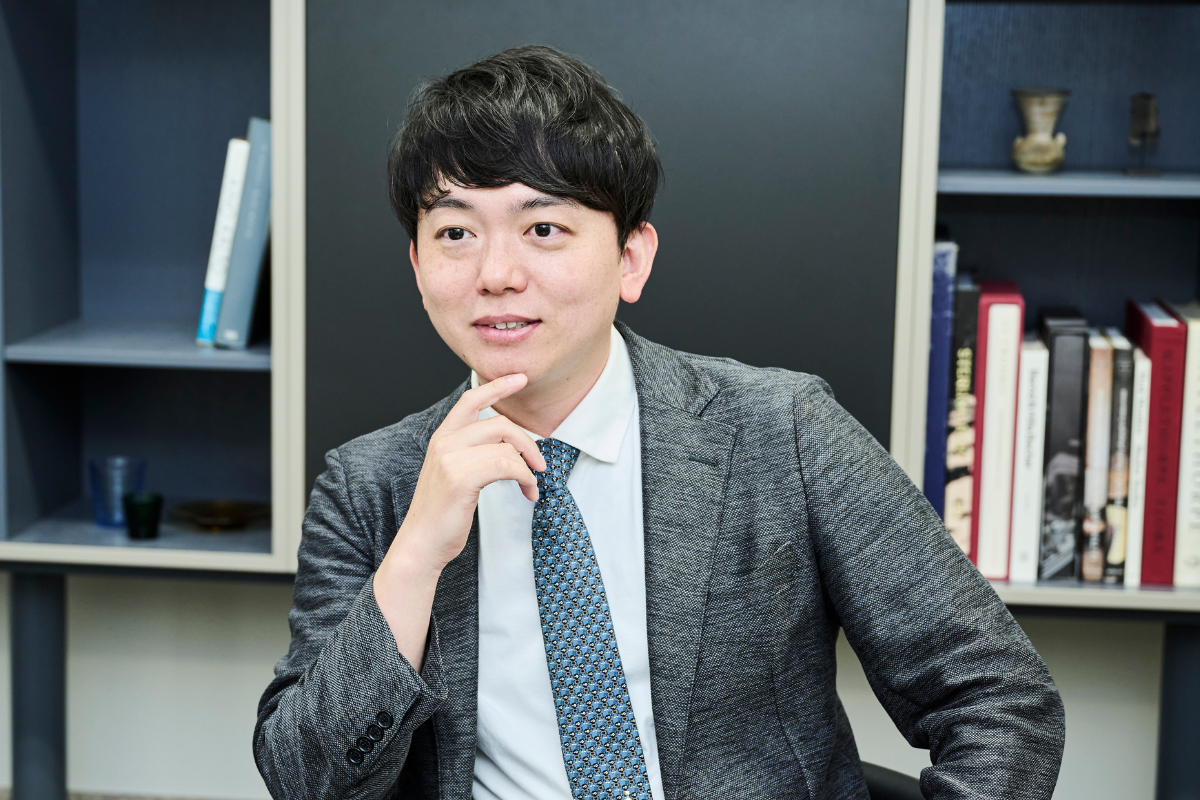
2026 Cannes International Film Festival Report
—The resolve of performers and the future structure of entertainment
May 12th to May 23rd, 2026.
Cannes, Southern France.
This city, where filmmakers, actors, producers, production companies, distributors, investors, and media professionals from all over the world gather, becomes a massive "crossroads of expression" for just two weeks each year.
As a legal practitioner involved in the entertainment field, and as someone involved in the IP and video business, I was given the opportunity to experience the 2026 Cannes International Film Festival firsthand.
Walking along the Croisette, a boulevard that runs along the coast, one senses a unique tension in the entire city, in stark contrast to the tranquil Mediterranean scenery.
The glamour of the stars walking the red carpet.
A hotel lounge where languages from all over the world can be heard.
The party continued until late into the night after the screening.
Business negotiations were taking place one after another.
However, what was truly impressive on site wasn't the superficial glamour. Rather, it was the quiet determination of the artists behind it all.
For a single film to reach the world, it involves an enormous amount of time, money, negotiations, conflicts, and the passion of countless people. I was once again strongly reminded that Cannes is not only a "festival of films," but also a place where the world's top content businesses intersect.
What is the Cannes International Film Festival?
The Cannes International Film Festival, founded in 1946, is one of the world's most prestigious film festivals.
In general,
- Cannes International Film Festival (France)
Venice International Film Festival (Italy)
- Berlin International Film Festival (Germany)
These are known as the "world's three major film festivals."
Among them, the Cannes International Film Festival is known as a festival that demands extremely high standards for both artistic merit and commercial viability. If the Academy Awards represent the "pinnacle of the film industry," then Cannes might be considered the "forefront of cinematic expression."
The Palme d'Or, the highest award, holds special significance for filmmakers. In recent years, attention to Japanese cinema has been steadily increasing, with director Hirokazu Kore-eda winning the Palme d'Or for "Shoplifters" and director Ryusuke Hamaguchi's works gaining international acclaim. This year, Tao Okamoto winning the Best Actress award for Ryusuke Hamaguchi's "Suddenly Feeling Unwell" was also a highly symbolic event for the Japanese film industry. I strongly felt at Cannes that the presence of Japanese actors and creators is growing stronger year by year.
Furthermore, interest in Japanese IP content as a whole, including anime, manga, games, and music, is increasing at an accelerating pace globally. At this year's Cannes Film Festival, I strongly felt the high level of anticipation for Japan-related projects from the atmosphere there.

"Film festivals" as a "huge international negotiation space"
What was particularly striking this time was how rapidly the global entertainment industry is shifting towards a "border-crossing structure."
Even just making one movie,
・Country of production
• Filming location (country/region)
・Investment structure
Distribution rights
Music copyright
・ Merchandising rights
・Portrait use
・Secondary use
・AI utilization
• Global distribution
Numerous rights and interests are intricately intertwined.
That's why, in this day and age, "how to design the structure" is far more important than "creating a work." Through conversations with overseas film directors, producers, and other industry professionals, I strongly felt their high level of interest in the Japanese market.
On the other hand, many overseas businesses are still struggling with the unique complexities of the Japanese market.
Differences in business practices.
Differences in decision-making speed.
Differences in contract culture.
The unique nature of rights management.
The distance between oneself and the creator.
And then there's the unique "atmosphere" of Japan.
If projects proceed without a thorough understanding of these factors, it often leads to significant friction and misunderstandings later on. That's why I believe that nowadays, not just legal knowledge, but also the ability to reconcile differing values is extremely important.
"The Philosophy of Non-Conflict"—Structural Design that Transforms Conflict into Value, Rather Than Eliminate It
I have long valued the concept of "the philosophy of non-conflict." However, this does not simply mean "let's avoid conflict."
Of course, conflict prevention is important. However, that's not the whole story. What's truly important is not leaving all the positions and intentions involved in the project in a state of "conflict."
In the world of movies and entertainment,
- The creator's desire to express
- Producer's responsibility for recovering funds
Investor profitability
• Strategy for distribution platforms
- Brand protection by management
Cultural differences with overseas companies
・Expectations of the fan community
Numerous values coexist simultaneously, and inherently, they don't easily align. In fact, in many projects, prioritizing "someone's interests" creates problems for someone else.
That's why what's needed isn't a compromise where one side has to endure something, but rather a commitment to continuously searching for a structure that allows each party's position and objectives to coexist at a higher level. I believe that's what true "non-conflict" means.
The goal is not simply to suppress conflict, but to transform vested interests into a new form of value creation that fosters trust. For this to happen, contracts alone are insufficient.
The atmosphere on the scene.
The psychology of a creator.
Industry-specific business practices.
International mechanics.
Future secondary use.
IP deployment.
Distribution strategy.
Furthermore, it's necessary to understand not only "who is genuinely striving for what future," but also "who is seriously aiming for what future." In other words, it's less about "legal matters" and more about designing the overall structure of the project.
I don't see much future in a structure where the parties involved simply use the cleverness or clumsiness of the clauses as a shield to exert oppressive control. Rather, I believe that all those involved should...
"With this team, we can confidently entrust our challenge to them."
The goal is to create a reality that makes people believe this is the case. I believe that this accumulation of efforts will ultimately prevent major problems and lead to a strong, long-lasting alliance.
Even while engaging in dialogues with filmmakers and businesspeople from around the world at Cannes, the people who left the impression of being trustworthy were not those who forcefully pushed their own opinions. Rather, they were those who could understand the other party's perspective and culture and guide the whole in a better direction. In that sense, I feel that future entertainment law will increasingly require not only the traditional role of "defense," but also the role of "translator" and "structural designer" to move the entire industry forward.
The more glamorous the setting, the more the integrity of those working behind the scenes is put to the test.
This time, I was also involved in some aspects of running the film festival's officially sanctioned social events and balls. My role was to wear white gloves and guide VIP guests. It wasn't a high-profile job like walking the red carpet. However, it is precisely in these kinds of settings that the presence of someone who can "create a sense of security" becomes crucial.
Creators, actors, and investors around the world are far more sensitive to an atmosphere of trust than to mere glamour.
The arrangements for that moment.
Distance.
Word choice.
Demeanor and conduct.
Information management.
The true nature of an organization or team is revealed in its details.
Legal practice is actually very similar. Simply being assertive and pushing forward won't build long-term trust. You need to avoid intimidating the other party unnecessarily, but also firmly protect what needs to be protected. I believe that this delicate balance is extremely important in international business.

A chance encounter with Tetsuro Degawa
I had a very memorable experience while I was there. I unexpectedly ran into Tetsuro Degawa in the city. And not just once, but two days in a row!
It seems he was in Cannes for the filming of an annual television program, and even when the cameras weren't rolling, he remained true to the program's purpose and earnestly faced his role. Witnessing this, I felt an extremely high level of professionalism.
Actually, my father attended the same local middle school as Mr. Degawa, and when I mentioned this to him, he responded very kindly. In a foreign land, for just a moment, you get a glimpse of local Japanese culture. Those kinds of moments strangely leave a deep impression. Perhaps the essence of entertainment is that kind of "human warmth."

"Human instability" is once again being sought after in the world.
At this year's Cannes Film Festival, what left the strongest impression on me was not so much the content of the films themselves, but the overall atmosphere surrounding "how to portray humanity."
In Japan, works and words that quietly contemplate "the instability of life itself" and "unspeakable fluctuations," such as "Suddenly Feeling Unwell," have garnered much empathy.
Also nominated in the competition section is Hirokazu Kore-eda's "Sheep in a Box." Although I haven't seen the film itself, the characters played by the two lead actors as a married couple give me much to think about.
Like Daigo from Chidori, who possesses a certain flaw or vulnerability yet is loved by many; and like Haruka Ayase, who exudes a quiet emotion and an atmosphere that carefully captures the nuances of the character—I felt that overseas film industry professionals are showing great interest in this uniquely Japanese way of portraying people.
While I'm not in a position to discuss the works themselves in detail, looking at the lineup of nominated works, I think there's a growing global interest in "human imperfection" that goes beyond just "strength" or "simplicity."
Not just flashy excitement or extreme content,
"How deeply and subtly can we portray human beings?" The global film market is beginning to return to this question once again. I sensed this trend from the atmosphere there.
Towards the future of Japanese entertainment
The Japanese entertainment industry is currently experiencing a significant boost. The government is also trying to position the entertainment business as one of its core industries.
But on the other hand,
·contract
・Rights clearance
International negotiations
AI
• Distribution structure
・IP protection
Global expansion
We are also seeing a rapid increase in extremely advanced and complex problems like these.
That is why what is needed is not just a "lawyer",
Understand the structure of the work,
Understanding the psychology of creators,
Understanding international negotiations,
Understanding the business structure,
And I think they are partners who can design structures that do not escalate conflict.
At Mimura Komatsu Law Office, experts in diverse fields such as music, film, anime, games, streaming, and merchandise collaborate to support entertainment projects both domestically and internationally.
In an era where the world is naturally the market, I want to create an environment where Japanese creativity is not unfairly exploited but fairly evaluated. And I want to carefully design, step by step, a structure that allows us to move forward without conflict as much as possible.
Witnessing the quiet determination of artists from all over the world in Cannes, I was deeply moved by their passion. Next year, I hope to arrive with more time to spare and attend more film screenings.
If I can meet with some of Japan's amazing creators and entertainment businesses again somewhere in Cannes next year, I'm sure it will mark the beginning of an even more exciting future than this year.
Profile
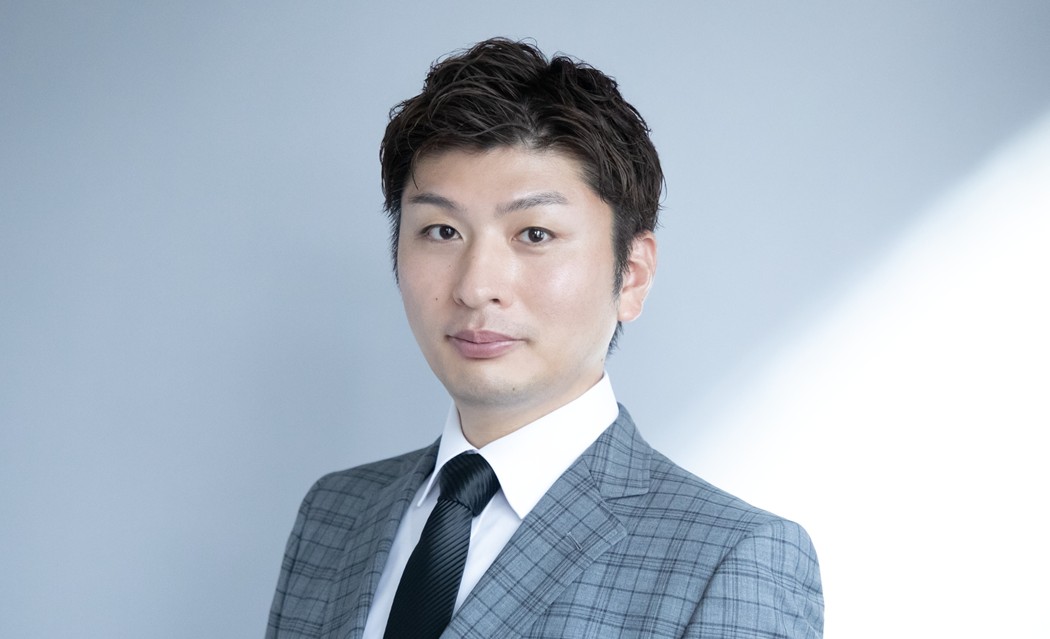
Naoki Sugimoto
After registering as an attorney, he worked in litigation and negotiation at a law firm that handled small and medium-sized business legal affairs and general civil matters. He also worked in the entertainment industry, including film production, making use of his experience as a bridge between the practical side of things and experts in the department directly under the management of an entertainment production company.
Through his work experience, he became keenly aware of the need for a team structure to support the entertainment business, and so he joined Mimura Komatsu Law Office. As a practitioner with a "philosophy of non-conflict" and an understanding of the issues faced on the ground, he seeks to create an environment and design systems that allow both rights holders and production sides to co-create.
【2026.6.22】
Click here for legal advice and media appearances
ContactMiKoTama email magazine
Distributing various legal information topics via email newsletter
Other articles by Naoki Sugimoto
-
[Entertainment Report - Domestic Edition / Seminar Report - Part 2]
Transforming Rules into Strategies: Redefining Entertainment LawOn April 9, 2026, MIKOTAMA Seminar #08, "Rules (Customs)..." was held, hosted by Mimura Komatsu Law Office.
-
[Entertainment Report - Domestic Edition / Seminar Report - Part 2]
Transforming Rules into Strategies: Redefining Entertainment LawOn April 9, 2026, MIKOTAMA Seminar #08, "Rules (Customs)..." was held, hosted by Mimura Komatsu Law Office.
-
[Entertainment Report - Domestic Edition / Seminar Report - Part 1]
Transforming Rules into Strategies: Redefining Entertainment LawOn April 9, 2026, MIKOTAMA Seminar #08, "Rules (Customs)..." was held, hosted by Mimura Komatsu Law Office.
Related article
-
[Special Roundtable Discussion with Former Judges and Lawyers - Part 2]
Five former judges turned lawyers discuss law firms that are "strong in litigation."
—Two perspectives: "Judges" and "Lawyers""Can we really win this lawsuit?" — Many corporate legal professionals and executives have thought this at some point...
-
[Series: Generating AI and Voice Protection] Part 2
Tracking domestic and international developments chronologically – From private self-defense to rule-making"My favorite voice actor is singing a song they've never sung before." "In that person's voice, they're saying something they would never say themselves..."
-
Lawyers specializing in handling scandals: "Emergency physician type" lawyers
The Crossroads of Litigation, Criminal Cases, and Intellectual Property (Part 2)[Interview with lawyer Sho Kosasa] "When a problem arises within our company, we don't know who to consult..."