Leveraging our insider perspective on the industry,
An entertainment lawyer who supports creators.

[Interview by lawyer Sonoka Morikawa]
Attorney Sonoka Morikawa, whose passion for dance and music was her starting point, aspired to work in the entertainment industry. After gaining experience in startup law and contract work at a major music label, she resumed her legal practice in the spring of 2026 and moved to Mimura Komatsu Law Office.
We interviewed lawyer Morikawa, who aims to become a unique presence while always standing by artists and looking towards the future of the music and dance industry. We also asked him about the cutting edge of the music business in the age of social media.
My passion for dance and music led me down the path of entertainment law.
—First, could you tell us what led you to become a lawyer?
My love for Funk, Disco, Soul Music, and African American culture in general began when I discovered street dance in high school. I started with Motown, then moved on to Philadelphia Soul and West Coast music. Separately, I also love 90s R&B. Some famous artists I like include Michael Jackson, Stevie Wonder, Quincy Jones, Tower of Power, The O'Jays, TLC, and so on... I could go on forever!
Anyway, even though it was just a vague feeling, I had always assumed that I would work in the entertainment industry in the future (laughs). No other jobs really appealed to me. However, I felt that even if I graduated from university through the usual route and got a job at an entertainment company, I might get lost in the competition and it would be difficult to be involved in a proactive position. So I thought that if I had a lawyer's license, I could use my expertise and rarity as weapons to move more proactively in the industry, and that's why I went to law school.
My career as a lawyer began at a law firm that focused on supporting early-stage startups. There, I handled a wide range of cases, from routine legal consultations to fundraising and legality checks for business startups.
—After that, you moved to the contracts department of a music label. What was your reason for choosing to work in the contracts department rather than the legal department?
The reason I switched to a music label is that the music industry has many established companies, and newer agencies that support startups didn't receive many requests. But I still believed that I was meant to work in the entertainment industry, especially music (laughs). At that time, various connections came together, so I decided to take the plunge and change jobs.
However, the legal department of the record label handles corporate affairs and daily legal consultations, which I felt overlapped somewhat with the work I had experienced at the law firm. On the other hand, I was told that the contracts department was positioned right in the middle of the production department and the legal department, and that it was responsible for the contracts concluded by the record label's production team. I wanted to work closer to the production team, so I chose the contracts department without hesitation. I also heard that the work was highly specialized, and that despite some people having been in the same department for decades, there were still no lawyers there, so I felt that I could gain a niche career that ordinary lawyers wouldn't be able to experience, which was another deciding factor.
—What kind of work did you do in the contracts department?
My main job was handling contracts between labels and artists regarding copyright and related rights. Besides that, the contracts department often received small, everyday inquiries that were too difficult to discuss with the legal department, such as "I just want to draft an agreement" or "What does this say in the contract again?" Because we were in an intermediate position between the legal department and the field staff, we were flexible in our approach, sometimes referring them to the legal department when necessary, and sometimes resolving issues within the contracts department.
—That's really close to the actual situation.
That's right. I was involved in planning and production management in real time, so it was easy to hear about the concerns from the field. I was constantly exposed to the passion—or rather, the intense energy—of the people on site who wanted to create something great! It was the best (laughs).
Furthermore, since it can be difficult to assign value to entertainment content such as music, it was invaluable to learn about royalty rates and the going rate for pricing. There were also many things that you wouldn't know unless you were an insider, such as how to deal with talent and music agencies, and the unwritten rules and nuances unique to the industry. I also learned a lot about how to deal with "self-publishing" artists, who have increased in number recently due to the spread of social media.
—What kind of artists are referred to as "self-sufficient" artists?
I've arbitrarily coined the term "DIY" or "self-sufficient" to refer to artists who handle everything themselves, from songwriting and composition to recording, singing, and production. In the past, it was common for lyricists, composers, and producers to be separate entities, allowing artists to focus solely on performance. However, recently, there's been an increase in cases where artists handle everything themselves, from promotion to distribution, through social media.
While there have always been artists who couldn't or didn't want to belong to an agency or major label and therefore did everything themselves, nowadays, with the ability to promote on social media and distribute music using services like TuneCore, deliberately keeping the number of people involved and handling everything independently to concentrate revenue on the artist themselves has become an attractive option.
Of course, there's the difficulty of doing everything yourself, so in that sense, I think the existence of agencies and labels remains unshaken. However, when "self-produced" or "DIY" artists and major labels decide to work together, the major labels are often flexible in changing their roles. For example, CDs are still quite popular in Japan, but they might consider marketing strategies that focus on subscriptions rather than CDs, or they might put more effort into anime tie-ins and appearances on terrestrial television than before, or they might actively cultivate fan bases that "self-produced" or "DIY" artists can't easily reach on their own. I feel that they are coexisting well by being creative in how they work together.

Leveraging the perspective cultivated in the music business to empower artists.
—What are some of the legal issues facing the music industry in the age of social media?
Record companies generally have exclusive contracts with artists, so if, for example, artists from company A and company B collaborate, they will use a system called "exclusive release," which allows other artists to participate only on that specific master recording. In cases like "Artist A featuring Artist B," A pays a release fee to B. However, the problem arises when A and B collaborate on short videos on platforms like TikTok or YouTube, which have become increasingly common recently. Strictly speaking, permission is required for each case, as it would incur a release fee.
However, mutual collaboration is now mainstream, and there are many people who are making a living primarily through social media these days, so requiring permission on a case-by-case basis would be incredibly time-consuming, and ultimately, it would end up making no one happy—a structural dilemma. So, should we grant permission comprehensively? But then it comes down to the question of "what does 'exclusive' mean?"
—I see... In that situation, you had achieved your dream of working in the music industry, but what led you to switch jobs to Mimura Komatsu?
As a "dancing lawyer," I've continued dancing while working, so I've received various consultations from fellow dancers. My company allowed side jobs, so there was no problem taking on general civil cases such as divorce and inheritance. However, I realized that if I started taking on consultations related to dance businesses, there was a possibility of a conflict of interest with the company in the future. That's only natural, since we're all stakeholders in the same entertainment industry.
Up until now, I had always believed that I would work in the entertainment and music industry, but if I were to do that kind of work as a lawyer, I wanted to work more closely with dancers and artists, so I decided to leave the company.
At Mimura Komatsu, I had connections with several lawyers specializing in arts and entertainment, and I knew some people through my previous law firm. Because I trusted those people, I naturally envisioned myself working as a member of the firm.
—What kind of work would you like to work on in the future?
I want to leverage the expertise I cultivated in my previous job and commit to legal matters in the entertainment sector. In fact, I've been given the opportunity to work on many entertainment and music-related cases immediately after joining the firm, so I'm very grateful for this environment.
I want to focus not only on the music industry, but also on the dance industry. The demand for dance is still smaller compared to music, but the number of people who dance, from children to the elderly, is definitely increasing, so as someone who loves dance, I would be happy if I could contribute to the growth of the industry.
—What challenges do you think exist in terms of legal frameworks for the dance industry?
Most of the consultations I receive concern instructor contracts. Other common issues include rights, working conditions, studio management, and event management. I want to support creative individuals, not just dancers, but even those in niche fields, by creating an environment where they can produce better work.
Ideally, I'd like to be someone creators can easily communicate with, like a lawyer who's available for a drink and a discussion about music while also offering legal advice.
Profile
Sonoka Morikawa
He previously worked at GVA Law Firm and Sony Music Entertainment before assuming his current position.
We focus on both startups and entertainment, with a focus on music, characters, entertainment and news, venture support, and intellectual property.
【2026.6.5】
Click here for legal advice and media appearances
ContactMiKoTama email magazine
Distributing various legal information topics via email newsletter
Related article
-
The interpersonal skills cultivated in sports clubs earn the trust of clients.
Aiming to become a fashion-oriented "local dialect"[Interview / Lawyer Mirinji] After dedicating himself to archery throughout middle school, high school, and university, he chose the path of becoming a lawyer...
-
[Special Roundtable Discussion with Former Judges and Lawyers ②]
The significance of having lawyers with a background as judges at a law firm.
—Situations where experience in litigation, intellectual property, inheritance, and notary public work comes into play.Mimura Komatsu Law Office specializes in litigation and intellectual property, and handles a wide range of legal matters, including general corporate law...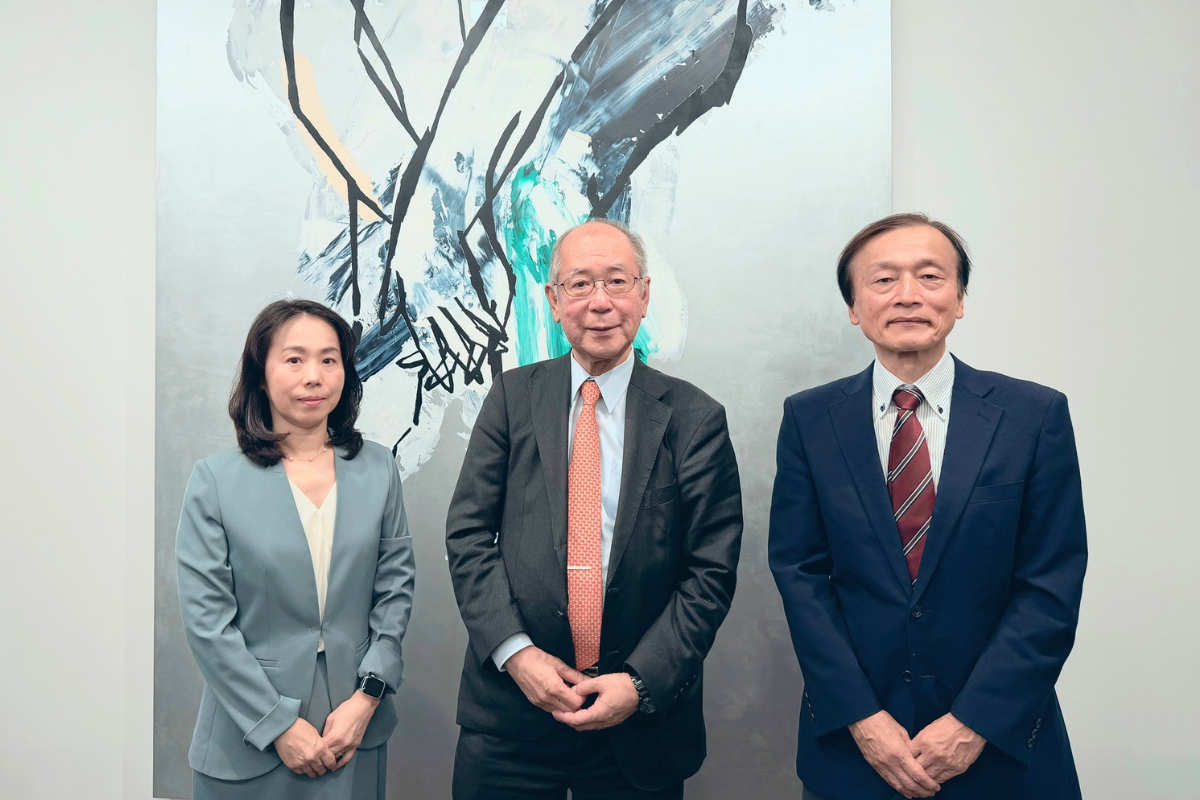
-
[Interview with the Managing Partner of Mimura Komatsu Law Office - Part 2]
Aiming to become a law firm strong in litigation.
—Our journey so far[Interview / Attorney Ryoichi Mimura & Attorney Junya Komatsu] Part 1 here Part 2 here Assuming...