[Fashion Law / Seminar Report]
Contract Practices Between Brands and Overseas Select Shops: Contract Terms and Negotiation Points for Building Good Relationships (Part 2)
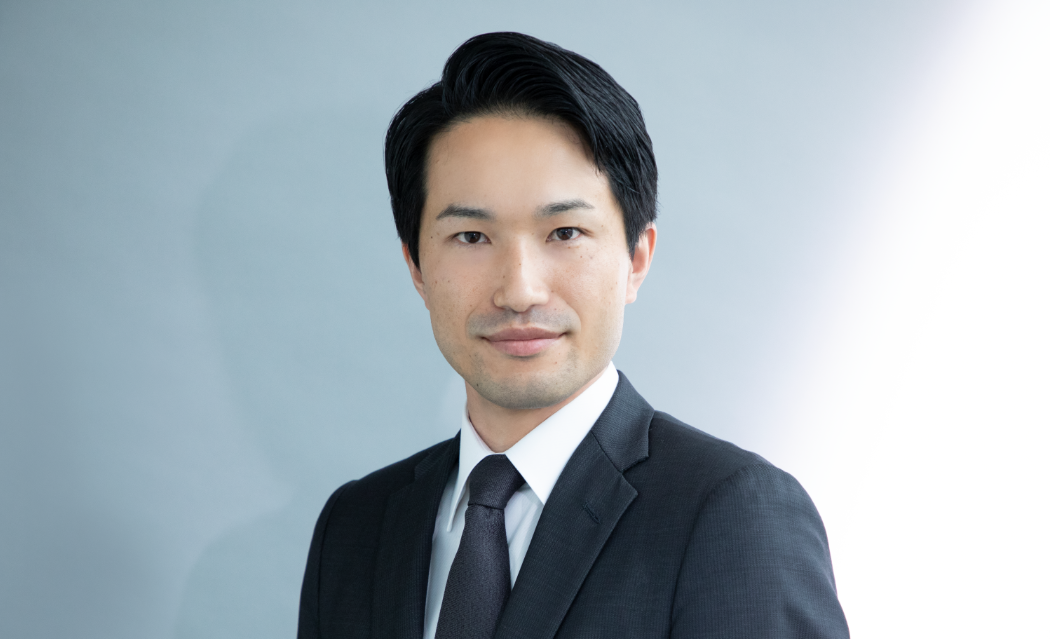
On April 13, 2026, the Mikotama Seminar #07-2, "Contract Practices Between Fashion Brands and Overseas Select Shops: Contract Terms and Negotiation Points for Building Good Relationships," was held, hosted by Mimura Komatsu Law Office. The seminar featured a fashion brand designer and COO as guests, and, based on actual trouble cases, explained the necessity of contract negotiation and specific points to consider.
Speakers/panelist:
Kanako Sakai(Fashion brand "KANAKO SAKAI"designer)
The brand debuted with its Spring/Summer 2022 collection and won the JFW Next Brand Award the following year, 2023.
I met lawyer Komatsu while studying in New York, and I have been receiving continuous legal support from him since the brand's inception.
Takashi Ishikawa(COO of Kanako Sakai)
Responsible for production management and overall brand operations for the brand.
KOMATSU Junya(Representative Attorney, Mimura Komatsu Law Office)
She has worked on cases in various fields, including corporate law, intellectual property, and litigation, and in 2015 she majored in fashion law at Fordham University School of Law in New York.
After returning to Japan, he has handled legal matters in creative fields such as fashion, art, architecture, and design, and currently supports more than 200 apparel companies.
When fashion brands expand overseas, many legal and administrative staff face the challenge of "contracts with overseas select shops." Many of these problems—such as "I can't understand the English contract," "I don't know which clauses are risky," or "I don't know what I can negotiate"—can actually be solved by consulting with a lawyer specializing in the fashion industry.
This article addresses specific, practical questions raised during the Q&A session with participants in the latter half of the seminar, focusing on key points for dealing with problems in the field.
Parts 1 and 2 are available here.
The benefits of preparing and submitting contract templates in advance
Q: If we create our own contract template, should we send it first?
It is highly recommended to prepare your own contract template. By offering your own template before the other party sends you one, you can more easily take the lead in negotiations.
There's no need to make the document excessively favorable to your company. If it's simple and contains only the obvious points, the other party shouldn't have much resistance.
The content should include the necessary conditions to prevent problems—such as deposits, cancellation conditions, late payment penalties, prohibition of trademark registration, and applicable law and jurisdiction—and there is no need to write it in a condescending tone. A simple structure of about two pages is sufficient.
Many brands may not have their own English-language templates, but we recommend having one created by a specialist. Once you have a template in place, including adjustments based on the power balance of each brand and the prevailing trends in the industry, it can be used for a long time.
Points to note when introducing contract terms into existing transactions
Q: If we've been trading for several seasons but haven't signed a contract yet, is it okay to send one now?
It's not uncommon for a deal to go on for several seasons without ever being signed.
To put it simply, there is absolutely no problem with sending the contract now. You can send a formal contract, or you can use the method I mentioned earlier in the main text, which involves listing the important conditions on the order sheet and applying them from the next order onwards.
However, sending an order sheet without any prior explanation may confuse the other party. This is especially true if the deposit terms are changing. The best approach is to politely explain that you would like to use these terms for future transactions, while subtly including the background and reasons for the change.
Contract procedures when placing an order through a sales agent
Q: How should I proceed with a contract when a sales agent is involved?
In overseas expansion, it is common to have orders placed through sales agents. In this case, since the agent takes the lead in placing orders, the signing of contracts tends to be postponed.
There are mainly two ways to address this.
One method is to provide sales agents with order sheets in advance and have them use them when placing orders. Another method is to have the brand and the select shop enter into a direct contract, separate from the orders brought in by the agents.
In cases where orders and deliveries are managed through a system, it is practical to enter into a separate contract from that system. Even when going through a sales agent, it is necessary to secure the minimum conditions that the brand wants to uphold through a contract.
However, demanding a formal contract from a new business partner from the outset can sometimes give the impression of being too heavy, given the prevailing sentiment in the industry. In such situations, it's more practical to include the necessary conditions in an order sheet. A realistic approach is to use both methods depending on the situation.
Preparation for non-payment and bankruptcy risks
Q: What are some recent industry trends—are there any topics related to the increase in non-payment and bankruptcy risks, and the emergence of new transaction forms?
In the last two or three years, we've seen a particularly noticeable increase in inquiries from people whose payment hasn't been collected because the other party has gone bankrupt.
When a company enters bankruptcy or civil rehabilitation proceedings, creditors are treated uniformly within a legal framework. Specifically, this involves declaring all outstanding debts worldwide, comparing them with recoverable assets, and then distributing them proportionally.
It's not uncommon for the assets a company has on hand to be less than one-tenth of its declared total value, and in some cases, only 1-10% can actually be recovered. By the time the brand receives information about the bankruptcy, the proceedings have already begun, making individual responses virtually impossible. As the principle of legal procedures is to treat everyone fairly, they are forced to proceed quietly within those constraints.
The only realistic way to prevent this is to implement a deposit and cash on delivery. If a deposit is not set up, there will be no way to recover the funds in the event of bankruptcy. This point has been repeatedly emphasized throughout this document.
Risks of exclusive distribution agreements
Q: What is an "exclusive distribution agreement," which is attracting attention as a new risk?
In recent years, there has been an increase in cases where select shops and major PR marketing companies propose becoming exclusive distributors. This trend is particularly noticeable in South Korea and China.
These proposals involve acting as an intermediary between the brand and the select shop, either by purchasing all the products at once or by taking on the entire process from production to sales. In essence, this is a form of licensing agreement, and while it offers the brand the advantage of gaining a partner with a certain scale and promotional power, it also carries very high risks.
The following are some points to pay particular attention to in this type of transaction:
- The markup rate (the terms of the purchase price) is set aggressively.
Many companies use their strong promotional capabilities to demand favorable purchasing terms. While this can sometimes lead to increased sales due to their strong sales power, it also puts pressure on the brand's profit margins. - It is highly exclusive and subject to strict restrictions upon contract termination.
Compared to transactions with typical select shops, these agreements generally have broader exclusivity clauses and stricter restrictions after the contract ends. Once a contract is signed, there is a risk that other sales channels in that country or region will be restricted for an extended period. - The leadership in branding is shifting.
Since PR and sales will be entirely entrusted to the other party, it will be difficult to control the brand's image and how it is presented. It is important to establish clear conditions in the contract regarding how the brand's value will be cultivated locally. - The risk becomes concentrated when that partner withdraws or goes bankrupt.
Because sales channels are consolidated with a single company, if that partner experiences financial difficulties or withdraws from the market, the sales channels in that region are lost all at once. When considered together with the bankruptcy risk mentioned earlier, this creates a structural risk that is difficult to diversify.
On the other hand, many brands that receive such proposals are in a situation where they are being strongly approached by the other party. In other words, the brands also have negotiating power. There is no need to hesitate in negotiating the terms, and they can firmly assert the aspects they want to protect, such as maintaining their brand image, setting contract periods, and clarifying termination conditions.
This type of transaction can be described as applying the know-how that trading companies have gained from introducing overseas brands into the domestic market in the opposite direction. However, fashion brands are often unfamiliar with this structure, and there are countless cases where they simply sign the contract presented to them without question. Consulting with an expert during negotiations can significantly reduce these risks.
Transaction risks with global e-commerce platforms
Q: What are the characteristics of your transactions with global e-commerce platforms?
While dealing with global e-commerce platforms like Taobao shares some similarities with dealing with select shops, there are also several distinct characteristics.
The most striking difference is the strong emphasis on exclusivity. While select shops may also seek exclusivity clauses, platform companies tend to demand exclusivity even more strongly.
Furthermore, a distinctive feature is that they seek involvement not only in sales but also in promotional activities. They often present the benefit of leveraging their strong PR base in their home country to contribute to expanding brand awareness, and then request an exclusive contract that includes PR services.
While there is potential for expanding sales volume, the scope of exclusivity is broad, and the exit conditions are strict. Therefore, it is essential to carefully consider at the contract stage whether the brand can be free to move on to other platforms once the relationship with that platform ends.
Small fashion brands, in particular, should seek advice early.
During the Q&A session, we also touched upon the topic of how smaller fashion brands tend to feel more psychologically hesitant to consult with lawyers.
Many brands seem to believe that they must accept the terms offered by the other party without question, or that negotiation is simply impossible. However, in reality, in most cases, some improvement is possible by requesting adjustments to the terms at the right time. The question is not whether negotiation is possible, but when and how to take action.
Once a contract is signed, your options become limited. After the order conditions are finalized, the effort required for changes increases. In many cases, people come to us for advice only after a problem has occurred, but the reality is that at that point, there are limited options available.
The fear of incurring legal fees is one reason why people postpone seeking advice. However, preliminary consultations often allow for a quick resolution of the issue, and the costs are relatively low. It's significantly cheaper to address problems beforehand than to try to resolve them after they arise.
For brands expanding internationally, contractual issues are an unavoidable reality. However, with the right knowledge and preparation, many risks can be avoided in advance. The key is to ensure that the terms are in place before the transaction begins, rather than reacting after a problem arises.
Furthermore, for those who find attending a seminar format intimidating, we are considering creating a more casual setting where people can easily drop in. Some have expressed that an informal setting where brands can share their concerns and consult with experts as needed would be easier to use. In any case, connecting with experts before problems arise is ultimately the most efficient way to deal with them.
We hope that the information presented in this seminar report will serve as a stepping stone for brands considering overseas expansion.
Please feel free to contact us before you have any concerns.
"I need someone to review the contract, but I'm worried about the cost." "We're about to start doing business with a new select shop, but I don't know where to begin." If you have any of these concerns, please contact Mimura Komatsu Law Office first.
In many cases, a clear direction can be determined within about 30 minutes during a preliminary consultation, and the estimated fee varies depending on the lawyer's years of experience. Compared to dealing with a problem after it has occurred, early consultation can significantly reduce both time and costs.Attorney Komatsu's InstagramWe also accept initial consultations via direct message. Please feel free to contact us before anything happens.
For requests and inquiries, please contact us.CLICK HERE
【2026.5.29】
Click here for legal advice and media appearances
ContactMiKoTama email magazine
Distributing various legal information topics via email newsletter
Other articles by Junya Komatsu
-
[Third Office Information Session Report ①]
A law firm specializing in litigation, with five former judges on staff.Mimura Komatsu Law Office was established in 2019 by attorneys Ryoichi Mimura and Shunya Komatsu.
-
[Fashion Law / Seminar Report]
Contract Practices Between Brands and Overseas Select Shops: Contract Terms and Negotiation Points for Building Good Relationships (Part 2)On April 13, 2026, Mikotama Seminar #07-2 "Fat..." hosted by Mimura Komatsu Law Office
-
[Fashion Law / Seminar Report]
Contract Practices Between Brands and Overseas Select Shops: Contract Terms and Negotiation Points for Building Good Relationships (Part 1)On April 13, 2026, Mikotama Seminar #07-2 "Fat..." hosted by Mimura Komatsu Law Office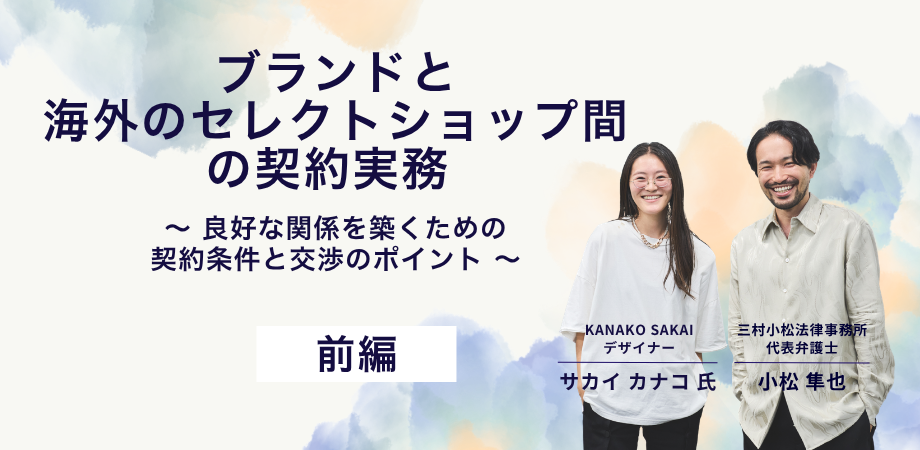
Related article
-
[Series: Generating AI and Voice Protection] Part 2
Tracking domestic and international developments chronologically – From private self-defense to rule-making"My favorite voice actor is singing a song they've never sung before." "In that person's voice, they're saying something they would never say themselves..."
-
[Series: An Introduction to Trade Secrets for Practitioners] Part 4 (Final)
What happens if you infringe on trade secrets?
- Criminal penalties, civil liability, and disciplinary actionIn serious cases, criminal penalties may be imposed. In cases of serious infringement of trade secrets, criminal penalties may be imposed. For individuals...
-
[Series: An Introduction to Trade Secrets for Business Professionals] Part 3
The biggest point of contention: "Secrecy management"
What's needed isn't "impenetrable defense," but "recognizability."Why is "confidentiality management" a point of contention? Trade secrets are intangible "information." In the case of patents, ...