An Entertainment Law Attorney Based in New York Discusses the Cutting Edge of Global Law
Legal Practices in Entertainment and Overseas Expansion (Part 2)
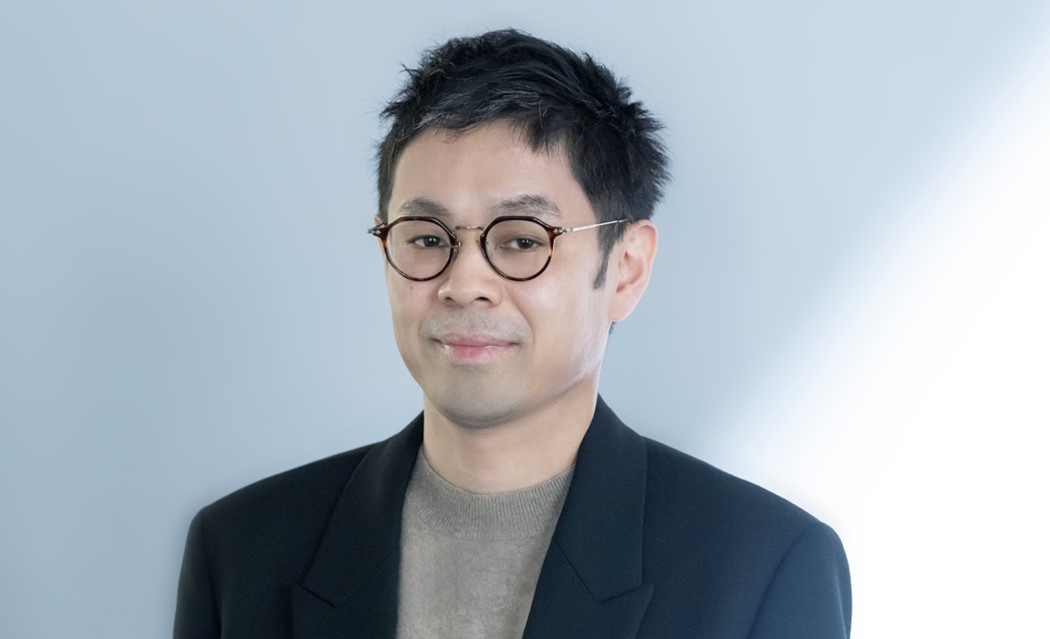
[Interview by lawyer Yusuke Hisa]
Attorney Yusuke Hisa, while affiliated with Mimura Komatsu Law Office, is based in New York and handles entertainment-related overseas expansion cases. His experience includes a secondment to the Ministry of Economy, Trade and Industry's Counterfeiting Countermeasures Office, in-house experience at major sports video streaming company DAZN, studying at New York Law School, and working at an entertainment-focused boutique firm in California. Currently, he supports clients' legal affairs as an entertainment lawyer with expertise in both Japanese and American legal systems.
In this article, we interviewed lawyer Hisa about his career development to date, his current practice, and the legal challenges that Japanese companies often face when expanding overseas.
In the second part, we'll delve into how to interact with the legal department based on in-house experience, practical tips for utilizing external lawyers, and the author's ideal image as a lawyer and personal passion for entertainment.
Click here for the first part
How to reconcile the creator's vision with legal rules.
—Work methods unique to an entertainment lawyer and ideal collaboration with the legal department
—What do you think is the unique appeal of entertainment law? How does it differ from general corporate law?
I think the most interesting aspect is the need to reconcile what creators want to make with the optimal legal solution. In typical corporate legal work, you might just hand over the answer, "This is how it is legally," and that's the end of it, but in entertainment, it often doesn't end there.
To give a concrete example, when designing user consent for an app, if you pursue the most legally secure design possible, it would require users to go through a considerable number of steps when they start using the app. However, doing so would increase the churn rate, so creators would naturally say, "I absolutely hate that kind of UI."
My role is to present two options side-by-side: Option A, which is the legally best option, and Option B, which has risks but falls within an acceptable range. Information such as "Option B has very little enforcement history, so the risks are limited at this point" is not found in legal textbooks. Based on this, I leave the decision of which option to choose to the client. I feel that this process of "combining the level of legal risk with business judgment" is the most rewarding aspect of working at Entertainment Law.
Another thing I make a point of doing in my relationship with clients is to actually download and use the games and apps I'm working on. This is partly to check if the specifications I advised on have been implemented, but more importantly, the fact that "a lawyer is using their service" or "playing games" instantly shortens the distance between me and the client. Lawyers tend to have a rigid image, so breaking that image changes how trust develops. If you have many clients, you'll end up playing a considerable number of games, but I consider that part of the job.
—Based on your in-house experience at DAZN, what do you think are the essential expectations that a legal department has of an external lawyer?
I believe the most important qualities required of an external lawyer are a sense of market practices and an understanding of industry trends, such as "what other companies are doing."
When I was working in-house at DAZN, there was a meeting of in-house lawyers where legal staff from various companies gathered. Talking to legal professionals from entertainment companies there gave me real-world information about the issues they were currently facing. External lawyers handle cases across multiple companies, so theoretically they are in a position to accumulate the same information. However, in reality, there aren't many lawyers who systematically grasp the trends of the entire industry, including the internal workings of each company. I feel that's where the value lies.
With regulations becoming increasingly complex, not all companies can perfectly comply with all of them. In such a situation, simply saying "this is correct in theory" is insufficient; what is needed are lawyers who can provide a practical compass, showing "how far other companies are complying and where our company should prioritize."
Another important realization I gained from my in-house experience is that what people in business units truly need is not a "legal answer," but "information to help them decide how to proceed with their business." It's not uncommon for the legal department to simply pass on the answers they receive from external lawyers to the business units. In that case, answers filled with technical jargon won't allow the business units to act or make decisions. Even when I provide answers as an external lawyer, I make sure to use language and structure that will allow the business unit person who ultimately reads the answer to think, "Now I can take action." I feel that my experience of directly interacting with business unit personnel in-house has become ingrained in my current work style.
—Could you share any tips on how legal departments can effectively utilize external lawyers?
In short, it means "sharing risk tolerance levels at an early stage."
When I take on a one-off case as an external lawyer, I don't initially know what level of risk the company is willing to take or how they view legal matters. The way I structure my advice changes considerably depending on whether the company is cautious or willing to accept a certain level of risk in order to prioritize speed. As I build a long-term relationship with a company, I begin to see their policies and culture, which makes it easier to give more in-depth advice, and the quality of both the consultation and the advice improves.
There are two things I consciously do to build relationships. First, I make sure to provide timely information about regulations and legal changes related to my clients' businesses. Instead of only contacting them when a case arises, I make a point of regularly providing information such as, "This might be relevant to your company," which helps me maintain my presence as a lawyer they can rely on on a regular basis.
Another thing I do is visit clients when I return to Japan. Since I live in New York, simply saying "I'm back in Japan" becomes a regular point of contact. Conversely, this makes for a natural reason to visit, so I make good use of it. By meeting and communicating in person, I try to shorten the psychological distance and become someone they feel comfortable talking to.
—What is the first thing you would like to convey from a legal perspective to business owners and legal professionals considering international expansion?
The most important thing is to "consult us as soon as possible." While many things can be resolved later, there are certainly cases where things become irreversible or the costs of dealing with them increase significantly.
One thing to be particularly careful about in entertainment and game projects is that the initial contract may include clauses regarding secondary developments such as sequels, spin-offs, and film adaptations. For example, when a game developer signs a contract with an overseas publisher, there may be a clause casually included stating that "if a sequel is created, the same publisher must be used."
If a sequel isn't made, there's no problem, but if a sequel is decided upon, or if the relationship with the publisher deteriorates, this clause becomes a complete constraint. You might incur penalties or be unable to switch to a publisher with better terms. If you keep this point in mind during the initial negotiations, it's entirely possible to negotiate a more flexible clause. There are so many cases where people only realize this after signing, so I strongly recommend reviewing the contract beforehand.
Furthermore, I think many creators and sole proprietors are at the stage where they "don't know what to consult a lawyer about." So please don't hesitate to come and say, "I don't know, but can I ask you first?" If you have concerns about costs, you can consult the consultation desk set up by the Agency for Cultural Affairs,Arts and LawWe can also connect you with pro bono organizations like those mentioned. If you use this as an entry point, we can guide you to the right place.

From a childhood surrounded by creativity to becoming an entertainment-focused lawyer.
—The evolution of entertainment as seen on Broadway
—Could you tell us about the origins of your own interest in entertainment, Attorney Hisa?
Looking back, I think my parents had a big influence on me. My father used to work in fashion and apparel planning, and also designed miscellaneous goods sold in museum shops, so I was surrounded by creative work from a young age. When I was seconded to the Ministry of Economy, Trade and Industry, I had the opportunity to work with someone from an apparel company, and they said, "Your name is Hisashi, could it be?" When I talked to them, it turned out they were someone who had worked with my father in the past. I feel like my life has been intertwined with creativity in a broad sense, to the point where such unexpected connections are formed.
From an entertainment perspective, I played in the brass band in middle and high school, so I've always loved music. That led me to become interested in musicals, but I really got hooked when I saw "RENT." I watched it repeatedly in Japan, and I always wanted to see it on Broadway one day, which became one of the reasons I chose New York as my study abroad destination.
These days, I go to see Broadway shows about three or four times a month. I see both "On Broadway" shows in the main theaters and "Off-Broadway" shows in smaller theaters, and I sometimes go to see shows with different casts because even the same show can be a completely different experience depending on the cast. If you use memberships for students and theater staff, or buy tickets on the day of the show, you can see shows for a more affordable price than you might think.
There are two plays that have recently left a strong impression on me. One is "Every Brilliant Thing," a one-man show starring Daniel Radcliffe (the actor from Harry Potter), which has audience seats on stage where audience members can actually take on roles and participate in the play. Selected audience members interact with the main character as a lover, father, etc., but tickets for seats on stage are quite expensive. However, I think it's a once-in-a-lifetime experience. The other is a stage show that uses songs and motifs from the musical "CATS" to recreate "ballroom culture" rooted in New York's LGBTQ culture. The idea of connecting existing IP to a completely different cultural context is interesting, and it made me realize that entertainment can evolve in this way as well.
When you continuously watch Broadway shows, you naturally become more aware of the creators' intentions and how they are trying to express themselves. This has influenced my work as a lawyer. I think my desire to support creators after understanding their intentions comes not from studying law, but from my experience of loving entertainment.
—What kind of activities do you want to pursue as an entertainment lawyer in the future?
In terms of my work, I want to continue focusing on cross-media development of game characters and video works—projects where content transforms and spreads globally, such as through film and stage adaptations. I feel that the potential of Japanese content has not yet been fully realized, and there are many ways in which we can contribute from a legal perspective.
Fortunately, thanks to the network I've built at law firms in both Japan and the US, I now receive immediate information on important regulatory compliance, especially overseas, from lawyer acquaintances and industry newsletters. In addition to my past experience, I aim to gather a wide range of up-to-date information both domestically and internationally to provide value to my clients.
Outside of my professional work, I'd like to get involved in the non-profit theater community in New York. There are many non-profit organizations in New York, some of which provide theater experiences to homeless children, for example. I'd like to volunteer in places like that. I might be able to do something as a lawyer, but I envision myself getting involved more as a member of the theater community, as a person. I hope to be able to support the entertainment industry in a way that goes beyond the title of lawyer.
To share an interesting story, I once helped out a little with a friend's talent management company. My friend was a lawyer and also did management work, so I tried to take on that role, but it was quite difficult. However, the feeling of being closer to the production side was very interesting and it was a good experience, so I still hope to be involved in something similar, closer to the content creation side, in the future.
In the first part of this interview, we spoke with lawyer Hisa about his career development, his current work, and the pitfalls that Japanese companies often fall into when expanding overseas. Please check it out as well.
Yusuke Hisashi
After working at a law firm in Tokyo, the Ministry of Economy, Trade and Industry's Countermeasures Office for Counterfeit Products, and DAZN Japan Investment LLC, he obtained an LLM from Cardoso Law School (New York). He then worked at a law firm in California specializing in entertainment and Japan practice before assuming his current position. He resides in New York. He specializes in overseas expansion of games, apps, and video content, intellectual property, and licensing agreements. He also serves as a legal mentor for iGi (Indie Game Incubation Program).
【2026.5.21】
Click here for legal advice and media appearances
ContactMiKoTama email magazine
Distributing various legal information topics via email newsletter
Other articles by Yusuke Hisa

Related article
-
[Trade Secrets / Seminar Report - Part 2]
Leaking it is a disaster. Even letting it get in is a disaster. ~The reality and practical aspects of trade secret risk~MIKOTAMA Seminar #09, hosted by Mimura Komatsu Law Office, was held on September 29, 2026...
-
[Series: Generating AI and Voice Protection] Part 2
Tracking domestic and international developments chronologically – From private self-defense to rule-making"My favorite voice actor is singing a song they've never sung before." "In that person's voice, they're saying something they would never say themselves..."
-
[Trade Secrets / Seminar Report - Part 2]
Leaking it is a disaster. Even letting it get in is a disaster. ~The reality and practical aspects of trade secret risk~MIKOTAMA Seminar #09, hosted by Mimura Komatsu Law Office, was held on September 29, 2026...