An Entertainment Law Attorney Based in New York Discusses the Cutting Edge of Global Law
Legal Practices in Entertainment and Overseas Expansion (Part 1)
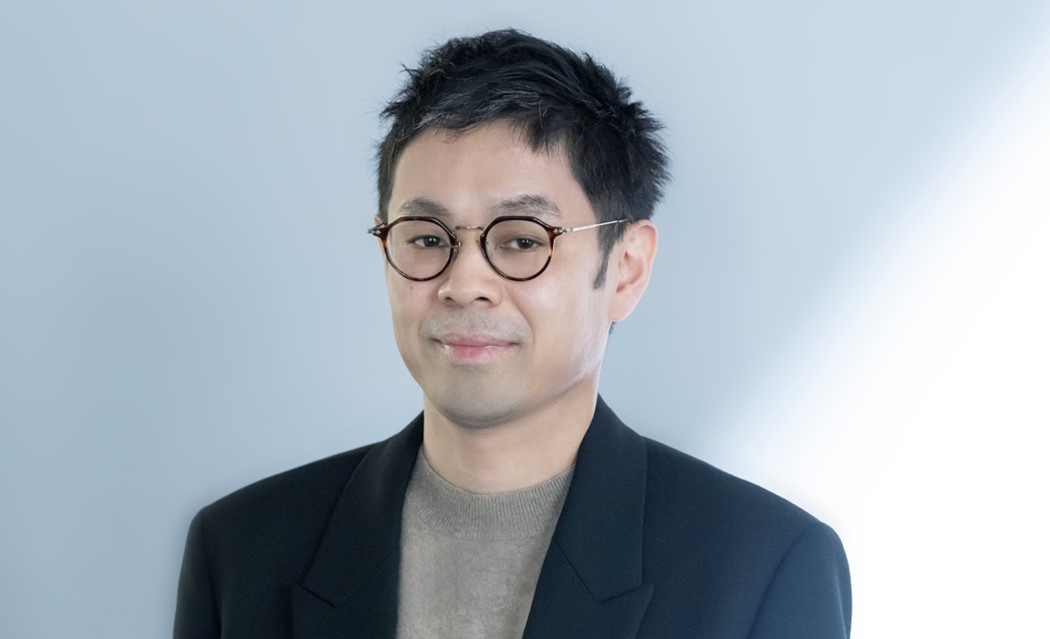
[Interview by lawyer Yusuke Hisa]
Attorney Yusuke Hisa, while affiliated with Mimura Komatsu Law Office, is based in New York and handles entertainment-related overseas expansion cases. His experience includes a secondment to the Ministry of Economy, Trade and Industry's Counterfeiting Countermeasures Office, in-house experience at major sports video streaming company DAZN, studying at New York Law School, and working at an entertainment-focused boutique firm in California. Currently, he supports clients' legal affairs as an entertainment lawyer with expertise in both Japanese and American legal systems.
In this article, we interviewed lawyer Hisa about his career development to date, his current practice, and the legal challenges that Japanese companies often face when expanding overseas.
Read the second part here
Ministry of Economy, Trade and Industry, DAZN, NY Law School, Overseas Boutique Office
—The expertise that lawyer Entamero honed through "inevitable detours"
—Could you tell us about your career path up to the present? When did you first decide to become an entertainment lawyer?
Ever since I became a lawyer, I've always wanted to work on entertainment-related cases. However, I didn't immediately have the opportunity to join a boutique law firm specializing in entertainment, so I first joined a generalist firm that handled both civil and corporate cases. Looking back, that was a very valuable experience because it allowed me to develop my fundamental skills as a lawyer through handling a wide range of cases.
After that, I was seconded to the Ministry of Economy, Trade and Industry's Countermeasures Office for Counterfeiting. My motivation was my interest in global projects, in addition to intellectual property, which is inseparable from entertainment. My main duties involved countermeasures against counterfeiting overseas and considering countermeasures when intellectual property infringing or illegal products appeared on online platforms. While organizing what Japanese companies should be careful about when expanding overseas, I was also involved in policy formulation on how platform operators should take countermeasures. This experience, which gave me both domestic and international perspectives, is still directly useful to me today.
After being seconded to my new position, I had planned to study abroad, but that was postponed due to the pandemic. In the meantime, I was given the opportunity to join DAZN, a video streaming service specializing in sports, as an in-house lawyer. The company's headquarters are in the UK, and although they had a legal department in Japan, they didn't have an in-house lawyer specializing in Japanese law, so they were outsourcing their legal work. I joined as their first Japanese lawyer. My main job was to support licensing agreements for baseball and the J.League, while also localizing new services coming from the UK headquarters to comply with Japanese law. The experience of figuring out how to apply the differences between Japanese and British law to practical work has become the foundation of my current job.
—What were your reasons for choosing Cardoso Law School in New York as your study abroad destination?
To be honest, I've always loved Broadway, so my primary motivation was wanting to go to New York. I applied to several law schools specializing in intellectual property, but what ultimately convinced me to choose Cardoso was the small number of Japanese students and the relatively small number of students in its LLM program, which meant there was a strong support system. In larger law schools, there are many LLM students, so it's difficult to give individual attention to each student. In that sense, Cardoso offered a much better environment.
—Is there anything in particular that stands out to you from your time studying abroad?
What I remember most vividly is participating in the "Tech Legal Clinic." This program involves students taking the lead in responding to inquiries from startups and small and medium-sized tech companies in New York, with the support of professors. We take responsibility for handling actual client cases, such as supporting trademark applications and reviewing contracts.
Opportunities like this are rare for LLM students in large law schools, so it was a valuable experience. Maintaining a practical understanding of law while studying abroad was a significant advantage when I moved to a local office after graduation.
—After studying abroad, you worked at Gamma Law Firm in California, handling both the Japanese practice and entertainment cases. How did you end up joining that firm?
Unlike major Japanese agencies, I didn't have connections with agencies where I would be seconded after studying abroad. So I researched agencies that focused on both Japanese practice and entertainment, and I sent them emails directly or followed up on connections via LinkedIn. Surprisingly, many agencies were willing to accept me even though they didn't have any openings at the moment. I felt that America has a culture that supports such proactive approaches by individuals.
In fact, there are very few law firms in the U.S. that offer both Japanese practice and entertainment law services. While there are several Japanese firms that handle entertainment cases, I think Gamma Law Firm was one of the few that clearly put that front and center at the time.
Incidentally, although the firm's headquarters were in San Francisco, I negotiated to be allowed to work remotely and was granted permission to work in New York. To be honest, I didn't want to leave the city where Broadway is located, but later a New York office was established, and I effectively became its first employee. The environment, where I could handle both overseas expansion projects for Japanese companies and licensing agreements for games, apps, and video works, was a perfect match for what I wanted to do, and I was able to gain valuable experience.
—Could you tell us what led you to decide to join Mimura Komatsu Law Office after that?
I've known Attorney Komatsu for about 7 or 8 years. We met at a community called "Arts and Law," which connects art and law, and we've maintained a continuous relationship ever since.
The direct reason I chose Mimura Komatsu was that I felt I needed to supplement my knowledge of litigation. I have handled many entertainment and intellectual property cases so far, but most of my experience has been in contract negotiations, and I haven't had many litigation cases. As the number of overseas cases increased, I strongly felt the need for the ability to predict what would happen if a case went to court.
As stated on the homepage of Mimura Komatsu, the firm specializes in "intellectual property," "international affairs," and "litigation," and employs several lawyers who are former judges. This was a major draw for me. In fact, after joining the firm, when a client in the United States asked me, "If a problem arises with a contract under Japanese law, what are the prospects if it goes to litigation?", I was able to provide an accurate answer by collaborating with the lawyers who were former judges. I feel that my experience with international entertainment cases, which is my strength, and the firm's deep expertise in litigation and intellectual property are creating a synergistic effect.
Another major factor was having lawyers specializing in each field. In the entertainment and fashion worlds, there are industry practices beyond the law, and information such as "what percentage is the going rate for revenue sharing" isn't written in law textbooks. It's a kind of intuition that only lawyers who have accumulated experience with many cases can understand. Having lawyers with deep knowledge in each field, such as film and fashion, within the firm, and being able to easily consult with them, directly contributes to the quality of service we provide to our clients.

Three pitfalls to watch out for when expanding your game app overseas
—Trademark, specification regulations, and AI clauses
—Could you tell us about your main current responsibilities? What kinds of inquiries do you receive most often from companies?
Our regular work involves reviewing and drafting license agreements. Many of these projects are related to games and apps, and we constantly create terms of service and privacy policies for overseas expansion. We have many repeat clients in this area.
The core of our work is supporting the overseas expansion of Japanese game and app companies. We handle a wide range of tasks, from advising on specification design that complies with US and European regulations, to negotiating and reviewing licensing agreements with overseas publishers, and creating localized versions of terms of service and privacy policies.
In recent years, we've seen a particularly large increase in consultations regarding regulatory compliance in overseas markets. Regulations surrounding platforms and apps are becoming increasingly complex worldwide, and Japanese legal departments are finding it increasingly difficult to keep up with the latest developments. "Protection of minors" is a particularly hot area. For example, Australia banned the use of social media by those under 16 from the end of 2025, but since many games incorporate features that allow users to communicate with each other, we receive inquiries such as, "Does our game fall under this restriction?" Europe is also continuing to strengthen regulations regarding age verification and protection of minors, and in the United States, there are regulations that require parental consent when obtaining personal information from those under 13, which affects the design of apps themselves.
Furthermore, there's been an increase in esports-related projects. From creating tournament rules to establishing participation conditions for underage players and designing parental consent procedures, esports is a sport with a large number of young players, so it needs to be carefully structured from a legal standpoint.
I also serve as a legal mentor for the indie game incubation program "iGi." My role involves providing individual legal consultations to domestic indie game developers as they proceed with contracts with overseas publishers. English publishing contracts are complex, and mishandling clauses regarding sequels and spin-offs can lead to significant restrictions later on, so I provide practical advice on these matters.
—From your perspective, usually living abroad, how do you view the current state of overseas expansion of Japanese entertainment content?
It's clearly gaining momentum. In New York, an event called "Anime NYC" is held every year, bringing together fans of anime, manga, games, and more from all over the world, and attendance is increasing year by year. The same is true for "Anime Expo" in Los Angeles. Anime used to be seen as a culture for a small, core group of fans, but now it's widely accepted as "cool." The change I'm experiencing firsthand is very clear.
The same is true for food culture. Omakase-style Japanese cuisine is becoming popular in New York, and matcha has become a staple on cafe menus. Localized versions like strawberry matcha lattes are spreading, and this is leading to an increase in people becoming interested in authentic matcha. We can see this pattern in various fields where Japanese content and culture serve as an entry point for businesses to branch out.
In the consultations I receive, there's been an increase not only in games and apps, but also in developing overseas sales channels for traditional crafts and dealing with regulations related to cross-border e-commerce for cosmetic brands. Trust in the quality of Japanese products is unwavering, so if you can clear local regulations and present them appropriately, there is ample fertile ground for acceptance. I feel that this is the case. While many consultations are related to cross-border e-commerce, there are also cases of full-scale entry by establishing a local subsidiary. I'm increasingly being consulted from the design stage, deciding which approach to take.
—Are there any risks or pitfalls that are often overlooked when Japanese companies expand overseas?
First, there are trademarks. If you try to use a service name or game title that you use in Japan overseas, you may find that the trademark has already been taken. You might think, "It's famous in Japan, so it's okay," but it's a completely different story overseas, and being forced to change the name can be a painful situation.
Next, let's talk about app and game specifications. While it's becoming more common to consult with lawyers regarding terms of service and privacy policies, regulations on the app's specifications themselves are often overlooked. There are quite detailed regulations in each country and state regarding age verification mechanisms, in-game gacha designs, and how purchase buttons are displayed. Simply using a UI created for the Japanese market often leads to problems. Legal documents are checked, but specifications are easily forgotten. This is an area that requires careful attention.
Furthermore, there's the increasing use of AI and its inclusion in contracts. With the growing use of AI in video productions and games, it's becoming more common to explicitly state whether or not AI is being used in contracts, and to include clauses prohibiting deepfakes. Clarifying the ownership of rights to materials produced by generative AI has also emerged as a practical challenge. Legislation and case law change rapidly in the US and Europe, so it's essential to stay constantly informed about the latest developments.
What these risks have in common is that they can all be addressed "before deployment." Once problems become apparent, the cost of responding skyrockets. I strongly recommend incorporating a legal perspective from the business design stage.
In the second part of this interview, we will continue to speak with Attorney Hisa about "the relationship between the legal department and external lawyers" and "practical tips for utilizing external lawyers," based on his experience working in-house.
Profile
Yusuke Hisashi
After working at a law firm in Tokyo, the Ministry of Economy, Trade and Industry's Countermeasures Office for Counterfeit Products, and DAZN Japan Investment LLC, he obtained an LLM from Cardoso Law School (New York). He then worked at a law firm in California specializing in entertainment and Japan practice before assuming his current position. He resides in New York. He specializes in overseas expansion of games, apps, and video content, intellectual property, and licensing agreements. He also serves as a legal mentor for iGi (Indie Game Incubation Program).
【2026.5.19】
Click here for legal advice and media appearances
ContactMiKoTama email magazine
Distributing various legal information topics via email newsletter
Other articles by Yusuke Hisa

Related article
-
[Trade Secrets / Seminar Report - Part 2]
Leaking it is a disaster. Even letting it get in is a disaster. ~The reality and practical aspects of trade secret risk~MIKOTAMA Seminar #09, hosted by Mimura Komatsu Law Office, was held on September 29, 2026...
-
[Series: Generating AI and Voice Protection] Part 2
Tracking domestic and international developments chronologically – From private self-defense to rule-making"My favorite voice actor is singing a song they've never sung before." "In that person's voice, they're saying something they would never say themselves..."
-
[Trade Secrets / Seminar Report - Part 2]
Leaking it is a disaster. Even letting it get in is a disaster. ~The reality and practical aspects of trade secret risk~MIKOTAMA Seminar #09, hosted by Mimura Komatsu Law Office, was held on September 29, 2026...