[Fashion Law / Seminar Report]
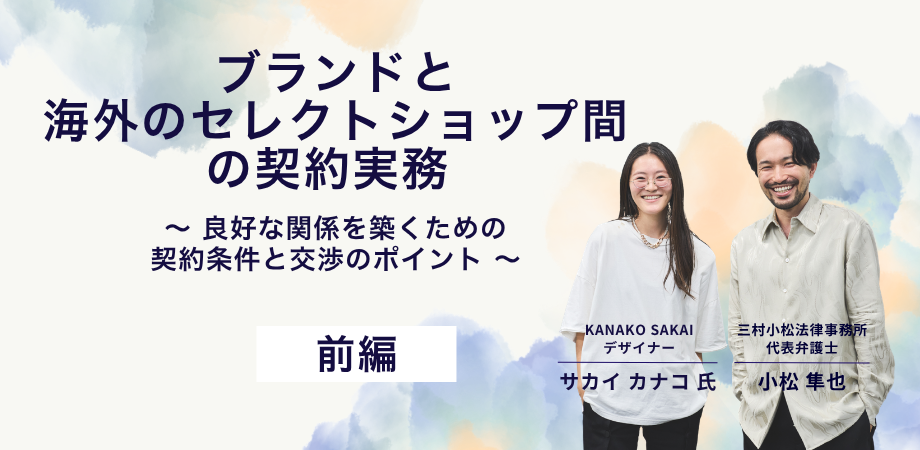
Contract Practices Between Brands and Overseas Select Shops: Contract Terms and Negotiation Points for Building Good Relationships (Part 1)
On April 13, 2026, the Mikotama Seminar #07-2, "Contract Practices Between Fashion Brands and Overseas Select Shops: Contract Terms and Negotiation Points for Building Good Relationships," was held, hosted by Mimura Komatsu Law Office. The seminar featured a fashion brand designer and COO as guests, and, based on actual trouble cases, explained the necessity of contract negotiation and specific points to consider.
Speakers/panelist:
Kanako Sakai(Fashion brand "KANAKO SAKAI"designer)
The brand debuted with its Spring/Summer 2022 collection and won the JFW Next Brand Award the following year, 2023.
I met lawyer Komatsu while studying in New York, and I have been receiving continuous legal support from him since the brand's inception.
Takashi Ishikawa(COO of Kanako Sakai)
Responsible for production management and overall brand operations for the brand.
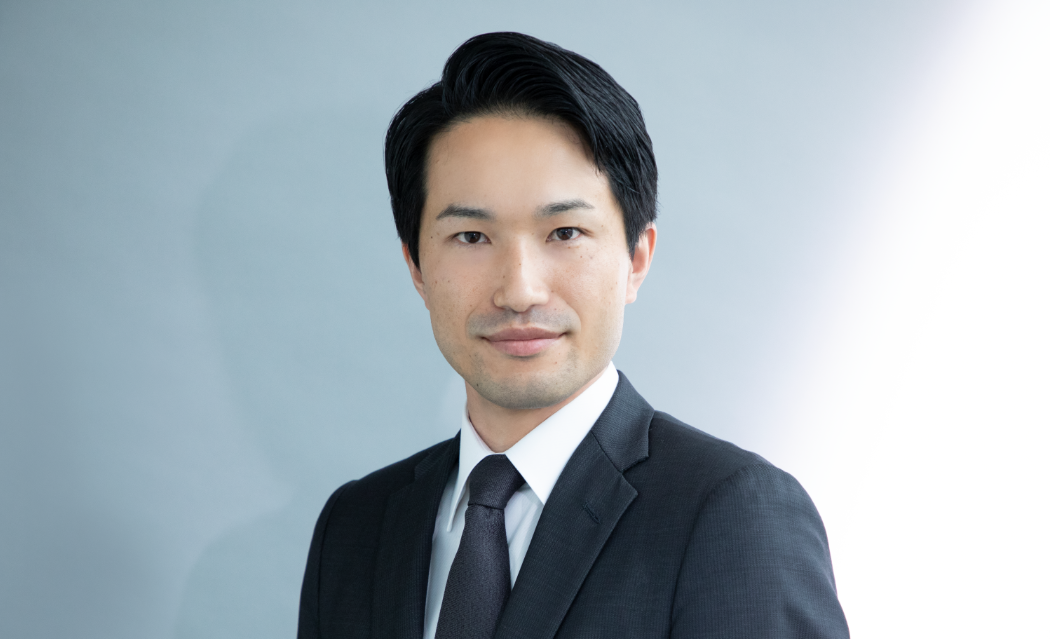
KOMATSU Junya(Representative Attorney, Mimura Komatsu Law Office)
She has worked on cases in various fields, including corporate law, intellectual property, and litigation, and in 2015 she majored in fashion law at Fordham University School of Law in New York.
After returning to Japan, he has handled legal matters in creative fields such as fashion, art, architecture, and design, and currently supports more than 200 apparel companies.
When fashion brands expand overseas, many legal and administrative staff face the challenge of "contracts with overseas select shops." Many of these problems—such as "I can't understand the English contract," "I don't know which clauses are risky," or "I don't know what I can negotiate"—can actually be solved by consulting with a lawyer specializing in the fashion industry.
This article, based on the seminar content, focuses on contractual details in transactions with select shops, outlining potential problems and how to avoid them.
Things to prepare before trading: Why trademark registration is a top priority
What should you prepare before starting a business relationship with an overseas select shop?
At the beginning of the seminar, it was emphasized that it is important to consult with a lawyer "before taking any action" rather than "after a problem has occurred." In Japan, people tend to feel that consulting with a lawyer is a high hurdle, but if you have a preliminary consultation, many issues can be resolved in about 30 minutes, and the costs are relatively low.
On the other hand, if a contract has already been signed, or if the request is made to "check if there are any problems with the contract" after all the terms and conditions have been decided, the amount of work required to revise the contract will increase, and the legal fees will rise.
By discussing your desired terms in advance when a new transaction is about to begin, you can confirm the direction of negotiations beforehand. Communicating your wishes to your business partners will ultimately ensure that your brand's intentions are reflected in the contract, leading to lower overall costs.
At Mimura Komatsu Law Office, the initial consultation fee is 25,000 yen (excluding tax).
Furthermore, at Mimura Komatsu Law Office, we not only accept consultations via email, but some lawyers also readily accept consultations via LINE and Instagram DMs, and subsequent communication can also be handled via LINE, so please feel free to contact us.
Priority of trademark registration
The top priority that should be taken care of before any transaction is "trademark registration."
A trademark is a right to a brand name or logo, and registration is required in each country. If you have the potential to expand overseas beyond Japan, registration in the target countries is essential.
Some prominent select shops explicitly state in their contracts that they will not do business with brands whose trademarks are not registered in the countries where they intend to sell their products. The reason for this is that if they sell products with unregistered trademarks, the select shop itself risks being involved in trademark infringement lawsuits from third parties. From a self-protection standpoint, trademark registration has become an essential contractual condition for select shops.
Trademark registration in other countries – China requires attention.
Particular caution is needed regarding China. There are frequent cases where local companies register the names of promising Japanese brands that are expected to expand into China in the future.
If you try to reclaim your trademark later, you'll be forced into unfavorable negotiations, such as being pressured to buy it back for millions of yen. Furthermore, you won't be able to supply clothing to select shops until the buyback negotiations are complete, resulting in lost opportunities for orders.
In terms of cost, registering for clothing (Class 25) in Japan and China, including advice on a basic trademark strategy, would cost approximately 15 yen each. This may seem like a burden for a newly established brand, but the costs will increase significantly if you try to deal with it later, and in many cases, it's simply not possible to register the brand name as is, no matter what you do. Therefore, we recommend considering your brand name with your intended sales countries in mind and proceeding with the registration process as soon as you've decided on a brand name.
It should also be noted that the United States has a unique system where registration is not possible without actual sales performance. In Europe, there is a system that allows for unified registration across EU member states.
- Japan (Class 25: Clothing)The estimated cost is around 10 to 15 yen.
- China (Class 25: Clothing)The estimated costs are similar. Due to the higher risk of being the first to register, registration at the same time as or earlier than in Japan is ideal.
- Europe and America: Registration is required when actually starting sales (in the US, actual usage history may be required).
Furthermore, consulting with a specialist lawyer from the brand name selection stage is extremely effective in reducing future risks. Brand names that are too short may be difficult to register because exclusivity is less likely to be recognized, and there may also be cases where a similar name has already been registered.
If you're considering global expansion, it's also important to choose a name that's easy to obtain in countries around the world.
Other preparations
Besides trademark registration, there are other things that need to be taken care of before conducting business.
To address exchange rate risk, it is necessary to consider how to set the billing currency for foreign currency transactions. Furthermore, in terms of logistics, it is crucial to pre-determine who will bear the costs of transportation and insurance, in accordance with the international trade terms known as "Incoterms." Appropriate contracts with specialized logistics companies are also required for customs duties and clearance procedures.
If you are considering cross-border e-commerce, you need to organize your privacy policy, return policy, and handling of shipping costs and customs duties in advance. Mimura Komatsu Law Office frequently provides support for consultations regarding these business conditions. Regarding R, there is little need to include an exclusivity clause, so we believe there is room for negotiation on this point as well.
How to read a contract and key points for negotiation
Points to be aware of when signing a contract with an overseas select shop. - Limitations of AI Translation and AI Checking
Contracts from overseas select shops often arrive in English and are typically around four pages long. In recent years, the practice of first checking a Japanese translation using AI tools has become widespread, but it must be said that the accuracy of AI is still not sufficient when it comes to checking contracts.
When using general AI, there is a problem in that revised proposals that are excessively favorable to the brand are sometimes presented, deviating significantly from a realistic negotiation point, and making it impossible to even negotiate with a select shop. In fact, there are many cases where a brand representative who used AI checks was told by the AI that "this is a terrible contract" and went into negotiations aggressively, only to find out from the perspective of experts such as lawyers that it was "normal from a business standpoint."
In particular, during negotiations, it's important not to completely reject the other party's proposal from the start, but rather to proceed while realistically determining a compromise. Also, keep in mind that overseas contracts are often presented with terms favorable to the other party, based on the premise of negotiation, and surprisingly, they are often willing to agree to changes if requested.
Based on our extensive experience in past transactions, we have accumulated a vast amount of data that can provide insights into recommended negotiation strategies, common compromises, and market rates. Therefore, we strongly encourage you to consult with a lawyer regarding contract terms and other related matters.
Exclusive Trade Clause
In recent years, there has been an increase in cases where contracts from overseas select shops include exclusive trading clauses. These clauses require that a company not do business with any other select shop in a particular country or region.
If you carelessly agree to such a contract, your sales channels in that region will be severely restricted for the duration of the contract. Furthermore, even after orders cease, the exclusivity clause may continue through automatic renewal, potentially leading to problems when you later try to contract with another business partner.
The following approaches can be considered as points to focus on during negotiations:
- By setting a short contract period, the risk of long-term exclusivity is mitigated.
- Ideally, we should seek the removal of the monopoly clause.
- If deletion is difficult, narrow the target from "the entire country" to "a specific city" or "a radius of a few kilometers."
- To avoid impacting our own e-commerce site, we will establish exclusion conditions for online sales (clearly stating that our own e-commerce site will not be subject to the exclusivity).
- If you absolutely must accept the exclusivity conditions, set a minimum order quantity as a condition.
- By setting a short contract period, the risk of long-term exclusivity is mitigated.
Trademark-related contract clauses (trademark clauses)
Contracts typically include clauses guaranteeing trademark registration in the sales region. If registration is not achieved, the contract often stipulates that the select shop can cancel the order, and the brand risks having to compensate the select shop for damages incurred (including lost profits and legal fees).
In particular, a clause stating that the brand must bear all legal costs, including those incurred by the third party who registered a similar trademark first, is included in almost all contracts, and this aspect is considered difficult to negotiate.
Even if trademark registration is not yet complete, it is sometimes possible to proceed with a transaction by presenting a letter of opinion from a lawyer stating that the application is still pending.
It is also possible to negotiate a condition that allows cancellation if registration is not completed, while waiving compensation for lost profits.
Caution regarding trademark registration by select shops
Sometimes, select shops and distributors will register trademarks on behalf of brands "in good faith." However, this often leads to major problems later on.
When a business relationship ends, emotional conflicts often arise over trademark transfer, and there is a risk that sales in that country may become impossible while transfer negotiations are prolonged.
To address this risk, we recommend the following:
- Register the trademark yourself as quickly as possible.
- Even in unavoidable circumstances, add a clause to the contract stating that "the select shop will not register the trademark."
In our next report, we will discuss "Payment Terms and Measures Against Non-Payment Risk" and "How to Approach Governing Law and Jurisdiction Clauses."
We hope this article will be helpful to brand managers aiming for overseas expansion in their contractual practices.
Please feel free to contact us before you have any concerns.
"I need someone to review the contract, but I'm worried about the cost." "We're about to start doing business with a new select shop, but I don't know where to begin." If you have any of these concerns, please contact Mimura Komatsu Law Office first.
In many cases, a clear direction can be determined within about 30 minutes during a preliminary consultation, and the estimated fee varies depending on the lawyer's years of experience. Compared to dealing with a problem after it has occurred, early consultation can significantly reduce both time and costs.Attorney Komatsu's InstagramWe also accept initial consultations via direct message. Please feel free to contact us before anything happens.
For requests and inquiries, please contact us.CLICK HERE
【2026.5.15】
Click here for legal advice and media appearances
ContactMiKoTama email magazine
Distributing various legal information topics via email newsletter
Other articles by Junya Komatsu
-
[Third Office Information Session Report ①]
A law firm specializing in litigation, with five former judges on staff.Mimura Komatsu Law Office was established in 2019 by attorneys Ryoichi Mimura and Shunya Komatsu.
-
[Fashion Law / Seminar Report]
Contract Practices Between Brands and Overseas Select Shops: Contract Terms and Negotiation Points for Building Good Relationships (Part 2)On April 13, 2026, Mikotama Seminar #07-2 "Fat..." hosted by Mimura Komatsu Law Office
-
[Fashion Law / Seminar Report]
Contract Practices Between Brands and Overseas Select Shops: Contract Terms and Negotiation Points for Building Good Relationships (Part 2)On April 13, 2026, Mikotama Seminar #07-2 "Fat..." hosted by Mimura Komatsu Law Office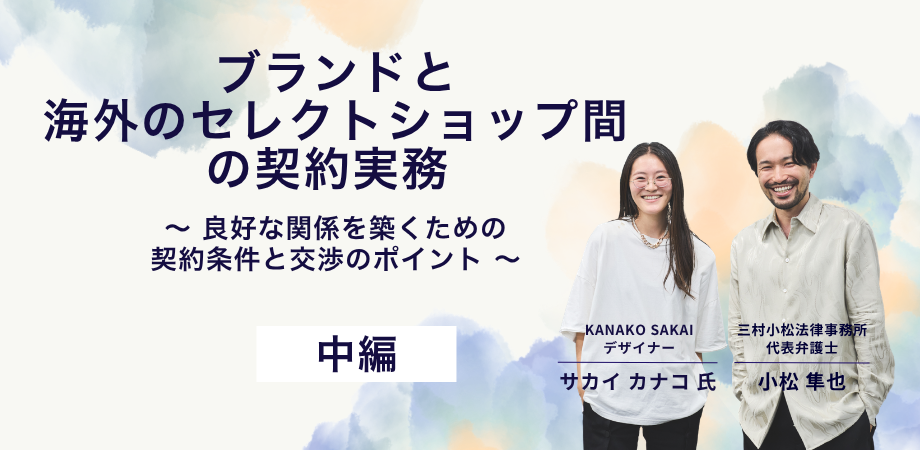
Related article
-
[Series: Generating AI and Voice Protection] Part 2
Tracking domestic and international developments chronologically – From private self-defense to rule-making"My favorite voice actor is singing a song they've never sung before." "In that person's voice, they're saying something they would never say themselves..."
-
[Series: An Introduction to Trade Secrets for Practitioners] Part 4 (Final)
What happens if you infringe on trade secrets?
- Criminal penalties, civil liability, and disciplinary actionIn serious cases, criminal penalties may be imposed. In cases of serious infringement of trade secrets, criminal penalties may be imposed. For individuals...
-
[Series: An Introduction to Trade Secrets for Business Professionals] Part 3
The biggest point of contention: "Secrecy management"
What's needed isn't "impenetrable defense," but "recognizability."Why is "confidentiality management" a point of contention? Trade secrets are intangible "information." In the case of patents, ...