[Entertainment Report - Domestic Edition / Seminar Report - Part 2]
Transforming Rules into Strategies: Redefining Entertainment Law
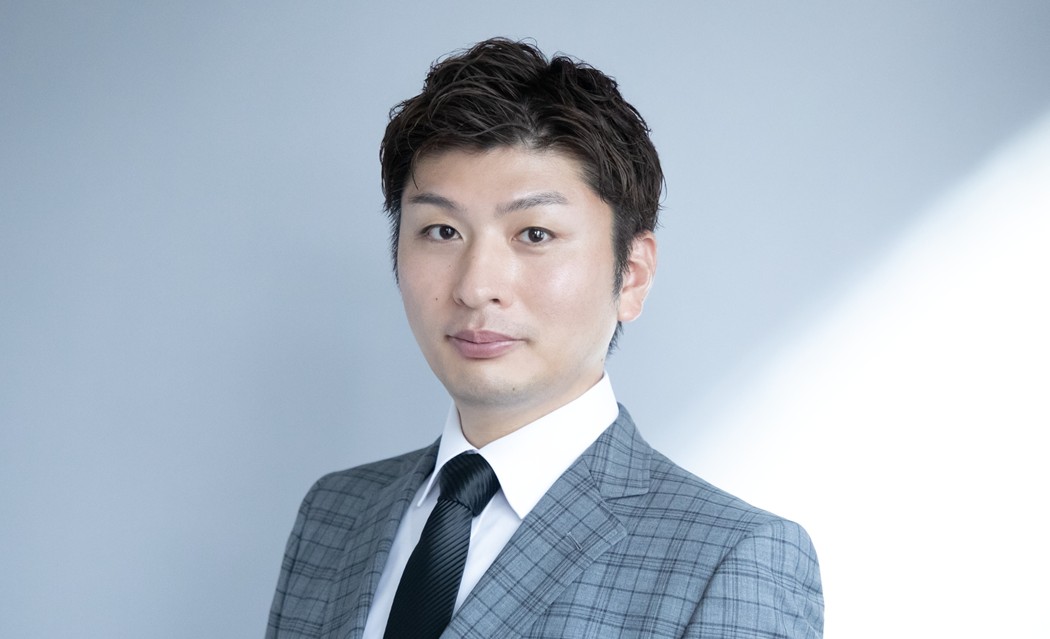
On April 9, 2026, MIKOTAMA Seminar #08, "Transforming Rules (Traditions) into Strategies: Redefining Entertainment Law," was held, hosted by Mimura Komatsu Law Office. The seminar explained the legal challenges facing the Japanese entertainment business and new approaches to resolving them.
Attorney Naoki Sugimoto, who served as the lecturer, was admitted to the bar in 2015 and joined a department directly under the executives of the LDH Group (a production company to which EXILE, J SOUL BROTHERS III, etc. belong). He accompanied directors from the start to the end of filming, observing the sets and working alongside production staff, building an unconventional career in entertainment law by being closely involved in the field. Rather than being taught the right answers by someone, he redefined the role of law based on his firsthand experience, making him a so-called "wild entertainment lawyer." After that, he was involved in the production of television programs, and in October 2025, he joined Mimura Komatsu Law Office. Based on his experience to date, he is engaged in a wide range of work, mainly focusing on legal support in the entertainment field.
This article addresses specific, practical questions raised during the Q&A session with participants in the latter half of the seminar, focusing on key points for dealing with problems in the field.
Part 1 (Case Studies ①-③)CLICK HERE
Part two (cases ④ and ⑤)CLICK HERE
What kind of control clauses would be effective in cases where a member of a production committee is acquired by a company with which they have a conflict of interest or are in a competitive relationship?
It is quite conceivable in practice that members of a production committee may be acquired by a competing company at some point.
One possible solution is to include a clause in the committee agreement that restricts the transfer of rights in principle. The idea is similar to a clause prohibiting unauthorized subletting in a lease agreement.
Specifically, if the actual control changes due to an acquisition or other means, for example, a change in the shareholder structure or business entity could be defined as a certain important matter, requiring reporting to a committee or prior consent. This design would allow the clause to function similarly to a so-called change of control clause.
However, this is an area that requires more detailed consideration in contract design, so it's best to consider this as just one possible approach.
What exactly does "a certain period" mean when it comes to sequel production rights?
"Strategies to prevent the sequel from being put on holdThis document provides supplementary information, including practical application, regarding the clause in the agreement that states that if the publisher does not begin production of the video work within a certain period, the original author can initiate negotiations with a third party.
This "certain period" is often designed to be tied to the duration of the exclusive license, and in some cases it is linked to the term of the publishing rights contract. It is frequently set to match the automatic renewal period of "5 years" or "7 years" in the publishing contract.
On the other hand, you may come across contracts that simply state "copyright protection period." Since copyright protection generally lasts for 70 years after the author's death, this can result in a considerably long period of binding. In reality, it seems that publishers often use existing contract templates rather than setting the period with a strong intention. By carefully explaining why a review of the period is necessary, there is ample room to have the terms reconsidered.
However, from the production side, it's understandable that they might want to secure the rights to sequels for as long as possible, especially when it's unclear how successful the first film will be. In practical terms, this is a perfectly natural decision.
However, in reality, just because the rights have been secured for a long period of time does not necessarily mean that the production side is actively interested in developing a sequel. Publishers and management companies may have some foresight regarding the possibility of a sequel, but within their relationship with the original author, it can be difficult to frankly tell them that "this work may not grow significantly in the future." This is because there is a risk that it will be perceived as a rejection of the work itself.
In that sense, an effective approach would be for the original author to proactively initiate discussions about a sequel as a business plan through their representative. This can reveal at what stage the discussions have stalled, and in some cases, the reason is not so much a contractual issue, but rather a business decision. In practice, such dialogues are often not sufficiently conducted, so starting by clarifying that point may help to move the situation forward.
If a publisher holds the rights to secondary use of a work, can the publisher demand a certain percentage of revenue sharing when the original author collaborates with a third party to create a sequel or other derivative work?
Since the publisher holds the rights to secondary use, in most cases the original author cannot freely negotiate with third parties, even before considering revenue sharing.
However, the idea of "allowing negotiations and permission with third parties to a certain extent in exchange for the publisher receiving a certain percentage of the profits" is certainly a plausible way to negotiate.
However, since publishers also incur certain costs in maintaining and managing the rights, I think they need to consider the balance between these costs and the situation.
Is the system of multiple companies investing and sharing rights, similar to the production committee system in Japan, common overseas as well?
When overseas content enters Japan, it is common for a single distribution company to acquire the screening and distribution rights and act as the point of contact within Japan.
In contrast, the Japanese production committee system has a rather unique structure from an international perspective. Because the point of contact and the final decision-maker are not easily visible, it can be one of the hurdles when promoting co-productions or overseas expansion.
The traditional production committee system has the drawback of making the revenue and expenditure structure difficult to see from the outside. How does the scheme you've explained ensure financial transparency?
To be frank, designing a complete system for fund management and information disclosure would be a very large-scale project. Especially for platform-type corporations, like JASRAC, it would require considerable operating costs, such as developing regulations and establishing a management system.
However, centralizing rights and contact points does make it easier to understand the situation than before. In fact, JASRAC manages rights under the watchful eyes of numerous stakeholders, despite facing various discussions and criticisms.
On the other hand, in an LLC-type scheme, the scope of disclosure obligations varies depending on the size of the company. If the company is not publicly listed, it is not necessarily subject to broad information disclosure obligations.
However, from the perspective of business trust rather than legal obligations, a certain level of transparency is required when soliciting investment. In that sense, it is necessary to establish voluntary rules regarding management, supervision, and information disclosure.
In an SPC (Special Purpose Company) type scheme, is it possible to separate the investment ratio from the profit distribution?
When using a limited liability company (LLC) in an SPC-type scheme, it is possible to flexibly determine the profit distribution ratio in the articles of incorporation. In other words, it is not always necessary to link the investment ratio with the profit distribution.
However, when actually designing the system, issues of theoretical consistency and tax implications may arise, so careful consideration is necessary.
In relation to this, to add some context about the current production committee system, the general idea is that profits are distributed according to the investment ratio. However, there are some slightly unusual cases in practice.
For example, this could involve joining the committee later, once the project's potential for success becomes clear, and participating in a way that ensures a certain level of return.
In that sense, some argue that there should be room to design returns not just based on simple investment ratios, but also on "who actually took action and to what extent they bore risk." While certain adjustments are already made in the form of manager fees and intermediary fees, there is room to consider schemes other than the committee system in terms of flexibility in profit distribution.
In an SPC-type scheme,Is it possible for creators to invest in labor (investing not with money, but with their own labor or creative activities)?
In an SPC-type scheme, there is room to flexibly design profit distribution not only based on monetary investment but also on actual contributions. Therefore, there is room to consider how to evaluate the creative activities and involvement of creators.
On the other hand, under the current production committee system, labor contributions are generally not permitted.
Since the production committee is structured on the premise that each company participates as a joint venture, each with its own role and point of contact, it is difficult to determine how to handle entities that participate solely by providing labor.
In SPC-type and platform-type models, to whom does the copyright belong?
In the case of movies, a key characteristic is that the person who created the work and the person who holds the copyright are not necessarily the same person.
Directors, art directors, and production staff—those actually involved in the creation—are considered "authors." On the other hand, the copyright itself belongs to the film producers who funded the production and oversaw the entire production process; this is the principle under copyright law. In the production committee system, this copyright is often shared by the entire committee, that is, all the members of the association.
In the SPC-type scheme we proposed, the copyright would be held by the corporation. On the other hand, in the platform-type scheme, there are patterns such as the transfer of rights to a trust, similar to JASRAC, or the case where each committee retains the copyright itself, while the platform only handles the function of handling rights.
In either case, actually putting it into practice as a system will require considerable theoretical organization and practical adjustments. At this point, much is still in the conceptual stage, but if we are to promote the overseas expansion of content as a national policy, I think we have reached a phase where we must seriously discuss how to restructure the existing system.
The strategies I've presented here are all rough proposals that still have room for further consideration. To implement them in real-world situations, they need to be further refined by bringing together the expertise of all stakeholders. That's why I believe the next step is for all players involved in the entertainment industry to participate in this discussion from their respective positions.
I hope that the discussions that took place at this seminar will contribute to the advancement of the entertainment business in some way.
For requests and inquiries, please contact us.CLICK HERE
【2026.5.8】
Click here for legal advice and media appearances
ContactMiKoTama email magazine
Distributing various legal information topics via email newsletter
Other articles by Naoki Sugimoto
-
2026 Cannes International Film Festival Report
—The resolve of performers and the future structure of entertainmentMay 12th - May 23rd, 2026. Cannes, Southern France. Filmmakers, actors, producers, and producers from around the world...
-
[Entertainment Report - Domestic Edition / Seminar Report - Part 2]
Transforming Rules into Strategies: Redefining Entertainment LawOn April 9, 2026, MIKOTAMA Seminar #08, "Rules (Customs)..." was held, hosted by Mimura Komatsu Law Office.
-
[Entertainment Report - Domestic Edition / Seminar Report - Part 1]
Transforming Rules into Strategies: Redefining Entertainment LawOn April 9, 2026, MIKOTAMA Seminar #08, "Rules (Customs)..." was held, hosted by Mimura Komatsu Law Office.
Related article
-
[Series: Generating AI and Voice Protection] Part 2
Tracking domestic and international developments chronologically – From private self-defense to rule-making"My favorite voice actor is singing a song they've never sung before." "In that person's voice, they're saying something they would never say themselves..."
-
[Series: An Introduction to Trade Secrets for Practitioners] Part 4 (Final)
What happens if you infringe on trade secrets?
- Criminal penalties, civil liability, and disciplinary actionIn serious cases, criminal penalties may be imposed. In cases of serious infringement of trade secrets, criminal penalties may be imposed. For individuals...
-
[Series: An Introduction to Trade Secrets for Business Professionals] Part 3
The biggest point of contention: "Secrecy management"
What's needed isn't "impenetrable defense," but "recognizability."Why is "confidentiality management" a point of contention? Trade secrets are intangible "information." In the case of patents, ...