[Entertainment Report - Domestic Edition / Seminar Report - Part 2]
Transforming Rules into Strategies: Redefining Entertainment Law
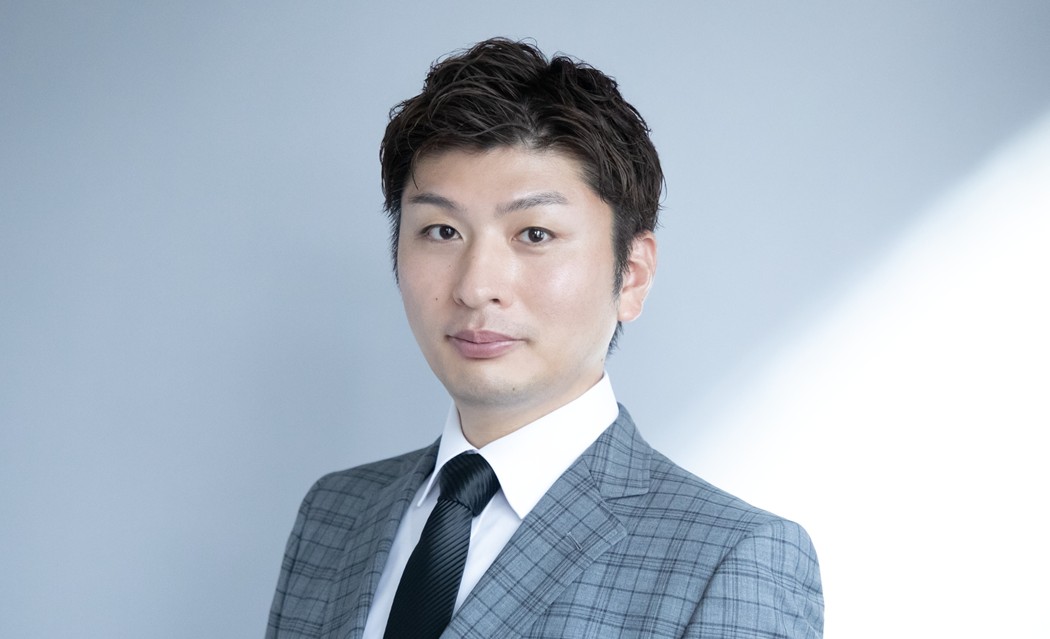
On April 9, 2026, MIKOTAMA Seminar #08, "Transforming Rules (Traditions) into Strategies: Redefining Entertainment Law," was held, hosted by Mimura Komatsu Law Office. The seminar explained the legal challenges facing the Japanese entertainment business and new approaches to resolving them.
Attorney Naoki Sugimoto, who served as the lecturer, was admitted to the bar in 2015 and joined a department directly under the executives of the LDH Group (a production company to which EXILE, J SOUL BROTHERS III, etc. belong). He accompanied directors from the start to the end of filming, observing the sets and working alongside production staff, building an unconventional career in entertainment law by being closely involved in the field. Rather than being taught the right answers by someone, he redefined the role of law based on his firsthand experience, making him a so-called "wild entertainment lawyer." After that, he was involved in the production of television programs, and in October 2025, he joined Mimura Komatsu Law Office. Based on his experience to date, he is engaged in a wide range of work, mainly focusing on legal support in the entertainment field.
This article, based on the seminar content, will organize and introduce from the perspective of today's entertainment law the importance of a "strategy" that carefully reviews existing "customs" such as rules and practices rooted in the industry and redesigns them to suit the modern business environment.
Part 1 (Case Studies ①-③)CLICK HERE
The second part (Q&A) isCLICK HERE
Case Study ④:Production Committee System and Overseas Expansion – Exploring New Schemes
The government has set a goal of increasing the market size of Japanese content overseas to 20 trillion yen by 2033. If we take this goal seriously, we need to reconsider whether the current production committee system can be directly applied to overseas markets.
Frankly speaking, the production committee system has a structure that tends to be shunned by overseas businesses. The main reasons for this are as follows:
- The responsibility is dispersed among multiple companies, and from an outsider's perspective, the point of contact for negotiations is unclear.
- The ownership of copyrights is complex, and understanding the overall picture of rights is costly.
- The decision-making structure, which requires unanimous agreement on important matters, makes it difficult to conduct negotiations quickly.
Furthermore, in addition to these structural issues, operational challenges are also becoming apparent in some cases. For example, with regard to overseas program sales (so-called program sales), the practical work is essentially left entirely to the person in charge, and overall committee management is often merely a formality. Agents who travel to overseas film festivals are left to handle everything with the understanding that "all we need is a percentage," and the committee simply receives the report and that's the end of it.
Furthermore, another problem is the disconnect between the sale of the video content itself, such as screening and distribution rights, and the overall business development of the IP, including merchandise, sequels, video games, and even international co-productions. The video is simply being sold as a consumer product, and there is a lack of thinking about nurturing it as an IP.
This is a problem that occurs not only in overseas expansion but also domestically.
Two possible solutions to this problem are:
[Proposal 1]Utilization of SPC scheme using a limited liability company (LLC) : For new releases
One possible solution to this situation is to establish a limited liability company (LLC) as a special purpose company (SPC) for each new project. Investors would participate as members of this LLC and be involved in decision-making.
By adopting this structure, the following advantages can be expected:
- Because employee liability is limited, the scope of investment risk becomes clearer even in joint productions with overseas companies.
- The rules for profit distribution can be flexibly set in the articles of incorporation, etc., allowing for designs tailored to contributions and roles.
Given the increasing number of co-production proposals from overseas studios, adopting this scheme from the early stages of a project is highly beneficial.
What is important here is an understanding of the legal nature of the traditional production committee system. Production committees are generally structured as partnership agreements, in which case each investor, regardless of the amount of their investment, is generally liable for unlimited liability.
The fact that the committee, established with the aim of diversifying risk, does not necessarily contribute to risk containment from a legal standpoint suggests that there is room for review.
Furthermore, given the government's goal of growing the content industry to an export scale comparable to that of the automobile industry, it is time to seriously discuss support measures, including tax incentives. Considering the Ministry of Economy, Trade and Industry's five-year plan outlining various measures, the industry itself is also required to reconsider its business schemes and move beyond the traditional production committee model.
[Proposal 2] Establishment of a platform-type incorporated association: For existing IP
Another proposal focuses on existing IPs created using the production committee system in the 1980s and 90s. As exemplified by Dragon Ball, Evangelion, and Sailor Moon, many works from this era still enjoy global recognition and have ample potential for re-evaluation and redevelopment.
However, due to the rights being dispersed among the various committee companies and changes in personnel or legal entities, it can be difficult to grasp the rights relationships in some cases, and in some instances, the whereabouts of contracts may be unknown.
In light of these circumstances, the following scheme can be considered as a response:
- A platform-type incorporated association will be established to serve as a central point of contact for the management and development of Japanese intellectual property (IP) produced under the production committee system in the 1980s and 90s.
- Each rights holder retains their interest (right to profit), while consolidating those rights into a legal entity in the form of a trust or exclusive license.
- By consolidating negotiation channels for overseas expansion and co-productions, we aim to streamline fragmented rights and enhance business agility.
While such schemes can be effective options for promoting the use of existing intellectual property, there are practical challenges, such as the burden of establishment and operating costs, and how to handle losses. Furthermore, the legal arrangements differ significantly depending on whether the rights are transferred from the committee to a corporation through a trust transfer, or whether the rights themselves remain with the committee while the corporation only handles the liaison function.
Regardless of the form adopted, it is necessary to carefully consider theoretical consistency when designing the system.
Future Direction – Towards a Shift Away from Production Committees
Nevertheless, the two-pronged approach of launching new projects using an SPC scheme with a limited liability company (LLC) and consolidating existing IPs into a platform-type corporation could be a powerful option for making future overseas expansion a reality.
Recently, we've seen companies with their own studios taking on co-production roles. These examples of forming projects in a different way than production committees and developing businesses flexibly will likely provide valuable insights for the industry as a whole in the future.
Traditionally, it has been taken for granted that the production committee that provided the funding would be responsible for consolidating and managing the rights. However, considering the changing times and market environment, it is worth considering as an industry whether the function of centralizing rights management, which has been handled by JASRAC in the music field, should also be introduced to the IP development of video and anime.
Case Study 5:Merchandise license change with conditions for removal
In the field of merchandising rights, we see the same structural problems as in previous cases.
In production committees where players familiar with merchandising are not involved, or where the managing company is not strong in merchandising, product development may effectively stagnate even if the exclusive license remains in effect under the contract.
Even if a company with the necessary expertise later brings in a product development idea, existing exclusive licenses become an obstacle, preventing the project from moving forward. As a result, the freshness of the business opportunity is lost, and time passes without anyone benefiting.
[[Proposal] License change with conditions for release
One possible approach to address this issue is a "conditional license modification," which involves encouraging active development based on an exclusive license, while pre-establishing a clause that allows for the conversion of the exclusive license to a non-exclusive license if commercialization does not actually progress within a certain period.
A "condition for termination" refers to a legal effect that has already occurred, which can be extinguished or modified if certain conditions are met. In this context, it means designing the exclusive license to be revoked if commercialization does not progress within a certain period.
The key point of this proposal is that it's not about "taking away" licenses. The premise is that companies holding exclusive licenses will continue to be proactive. However, commercialization has timing and freshness issues related to launch. If exclusivity is maintained even when concrete results are not produced within a certain period, the business of the rights holders as a whole may stagnate. Therefore, the idea is to establish rules from the outset that will remove exclusivity under certain conditions.
In the licensing business, there's a strong tendency to focus on whether a license is exclusive or non-exclusive. However, it's necessary to pause and consider why you don't want a non-exclusive license, and whether that reason is truly rational from a business perspective. Simply clinging to exclusivity out of a desire to avoid giving it to competitors is meaningless if it doesn't translate into action. Even a non-exclusive license can be valuable if it allows you to leverage your company's strengths and achieve better results. I believe this perspective is essential for future license design.
The role of legal affairs – strategic design as a seatbelt.
When discussing the role of legal affairs, expressions like "they act as the brakes" or "strategic legal affairs are about appropriately pressing the accelerator" are often used. However, in my view, legal affairs are closer to a "seat belt."
For a business to move forward with confidence, safety must be ensured. However, if the seatbelt is too stiff, it can actually hinder movement. I believe that the role of legal affairs going forward is to create an environment where businesses can move forward while ensuring the necessary safety.
The goal isn't simply to comply with legal provisions; it's about designing a system that allows the project to move forward as an integral part of the business.
The Philosophy of Non-Conflict – "Avoiding Litigation" and "Resolving Disputes" are Different
The entertainment industry has fewer lawsuits compared to other industries. At first glance, this might seem like a sign of a mature industry, but in reality, it's sometimes simply a matter of avoiding litigation.
Sometimes problems remain unresolved for reasons such as "it's too much trouble," "it's not worth the cost," or "I don't want to damage the relationship." This is merely avoiding litigation and is not a fundamental resolution of the dispute.
So why do problems arise? At their root are a lack of communication imagination and information asymmetry. Information asymmetry means that the information one possesses and the perspective one sees differ. Judging only within one's own limited perspective makes one unaware of the other party's circumstances and constraints. Misunderstandings between the original author and the publisher, differences in opinion between departments within the publishing company, and differences in the speed of decision-making between the managing company and the committee members can all stem from these differences in perspective. That's why, instead of blaming the other party, we need to return to the perspective of how to move a project forward.
Therefore, the role of a contract is not to bind the other party, but to design a rational and acceptable framework that allows joint venture partners to move in the same direction. Designing this framework, including the strategy for how to use it, is what modern entertainment law should be.
Equally important is "evidence management." This refers to the process of recording the background and intent of contract clauses in the form of emails, comments, etc. If a problem arises, having a record of "why that rule was established" and "what discussions took place at the time" can provide clues to resolving it.
Rather than simply writing a contract and being done with it, we believe it's important to build a record of communication. We also believe that meticulously and carefully documenting the human relationships that underlie the legal framework is a crucial role of legal services.
From this perspective, legal work moves away from simply drafting contracts and towards the question of how to design a system that allows all parties involved to work towards the same goal. From my experience in the field, I feel that the role of lawyers is gradually shifting from providing the correct answers to supporting the creation of project structures.
Conclusion
What the five case studies presented in this seminar had in common was an attitude of returning to the original purpose of "why those rules were created," rather than simply rejecting existing customs. Whether it was dealing with deadlocks, negotiating rights with original authors, or designing schemes for overseas expansion, the underlying theme of each case study was the practical question of "how to move the project forward."
To truly expand the content industry overseas, it is necessary for the entire industry to cooperate and redesign current practices to suit the times and the market. I believe the role of lawyers is expanding beyond simply providing legally correct answers to include working with stakeholders to consider and design mechanisms that will allow businesses to move forward.
The strategies I've presented here are all rough proposals that still have room for further consideration. To implement them in real-world situations, they need to be further refined by bringing together the expertise of all stakeholders. That's why I believe the next step is for all players involved in the entertainment industry to participate in this discussion from their respective positions.
In the next installment, we will share details of the Q&A session that took place during the latter half of the seminar.
For requests and inquiries, please contact us.CLICK HERE
【2026.5.1】
Click here for legal advice and media appearances
ContactMiKoTama email magazine
Distributing various legal information topics via email newsletter
Other articles by Naoki Sugimoto
-
2026 Cannes International Film Festival Report
—The resolve of performers and the future structure of entertainmentMay 12th - May 23rd, 2026. Cannes, Southern France. Filmmakers, actors, producers, and producers from around the world...
-
[Entertainment Report - Domestic Edition / Seminar Report - Part 2]
Transforming Rules into Strategies: Redefining Entertainment LawOn April 9, 2026, MIKOTAMA Seminar #08, "Rules (Customs)..." was held, hosted by Mimura Komatsu Law Office.
-
[Entertainment Report - Domestic Edition / Seminar Report - Part 1]
Transforming Rules into Strategies: Redefining Entertainment LawOn April 9, 2026, MIKOTAMA Seminar #08, "Rules (Customs)..." was held, hosted by Mimura Komatsu Law Office.
Related article
-
[Series: Generating AI and Voice Protection] Part 2
Tracking domestic and international developments chronologically – From private self-defense to rule-making"My favorite voice actor is singing a song they've never sung before." "In that person's voice, they're saying something they would never say themselves..."
-
[Series: An Introduction to Trade Secrets for Practitioners] Part 4 (Final)
What happens if you infringe on trade secrets?
- Criminal penalties, civil liability, and disciplinary actionIn serious cases, criminal penalties may be imposed. In cases of serious infringement of trade secrets, criminal penalties may be imposed. For individuals...
-
[Series: An Introduction to Trade Secrets for Business Professionals] Part 3
The biggest point of contention: "Secrecy management"
What's needed isn't "impenetrable defense," but "recognizability."Why is "confidentiality management" a point of contention? Trade secrets are intangible "information." In the case of patents, ...